Back to overview
  • Reduce Return Rate

Online product advisor: Help your customers choose the right product

  • Updated November 16, 2020 ● Published January 23, 2017
  • Daniela Ilincic
  • Reading time: 11 min.

With an online product advisor, you can help your customers choose the right product for their needs. This reduces high return and cart abandonment rates and increases your online store's sales. The online product advisor brings expert advice from brick-and-mortar stores to the digital world. But what is the best way to implement the perfect online product advisor in your online store? That's what this article is about.

This image shows a woman's hand typing on a tablet.

Why an online product advisor is useful

An online product advisor conducts a targeted consultation process, also known as guided selling, to determine the right product for the customer and thus assist them in their product selection. The goal is to guide customers to the ideal product in just a few clicks and avoid returns and abandoned purchases. Often used for functional products that require explanation, such as suitcases and running shoes. Guided selling can also be used for self-explanatory, preference-driven products, such as books and clothing.

Online product advisor vs. search function

A legitimate question at this point might be: Why does my online shop need an online product advisor if I have a good search function? The answer is actually quite simple: When an online shopper uses the search function, they already have some prior knowledge that they can use to find the right product via the search function, e.g., laptop, 15 inches, Toshiba. Once they are on the category page, the laptops are narrowed down according to the required specifications, e.g., color, processor, RAM, etc., until the right product is found.


Stay up to date on personalization: Sign up for the epoq newsletter. Register now!


An online shopper who has no prior knowledge needs an online product advisor. This advisor guides them through the right questions about the Toshiba laptop, 15 inches in black with a Core i7 processor, etc. It's actually the same as in a brick-and-mortar store: if I already know which product I need, I walk straight to it in the store and put it in my shopping cart. If I'm not sure which product is right for me, I look for a salesperson. It works the same way in an online shop.

How to choose the right product category

Before introducing an online product advisor, there are a few general questions you should ask yourself, such as:

  • Which product category causes the most returns or abandoned purchases?
  • Are these products among those that require advice in brick-and-mortar stores per se?
  • Do individual products exhibit a high degree of diversity, making it difficult for customers to make the right choice?

This allows you to determine which product categories have the greatest need for online product advice. You can find information about your returns and abandoned purchases via your shop system or Google Analytics, for example. If your:

  • If the return rate for a product category is particularly high, your customer may purchase the product, but be dissatisfied after receiving the goods and send them back. In these cases, your online shopper is ordering a product that does not really meet their needs. Here, it is important to help your customers choose the right product.
  • If the abandonment rate for a product category is high, your customer is abandoning the order process they started. Uncertainty can play a major role here. Your customer is not 100% convinced about the selected product and decides to cancel the purchase. In this case, it is important to confirm your customer's product selection.

After carefully analyzing your results, you should know which product categories your online shoppers need more advice on. Now select a product category for which you want to use Guided Selling.

Preparatory measures for the use of an online product advisor

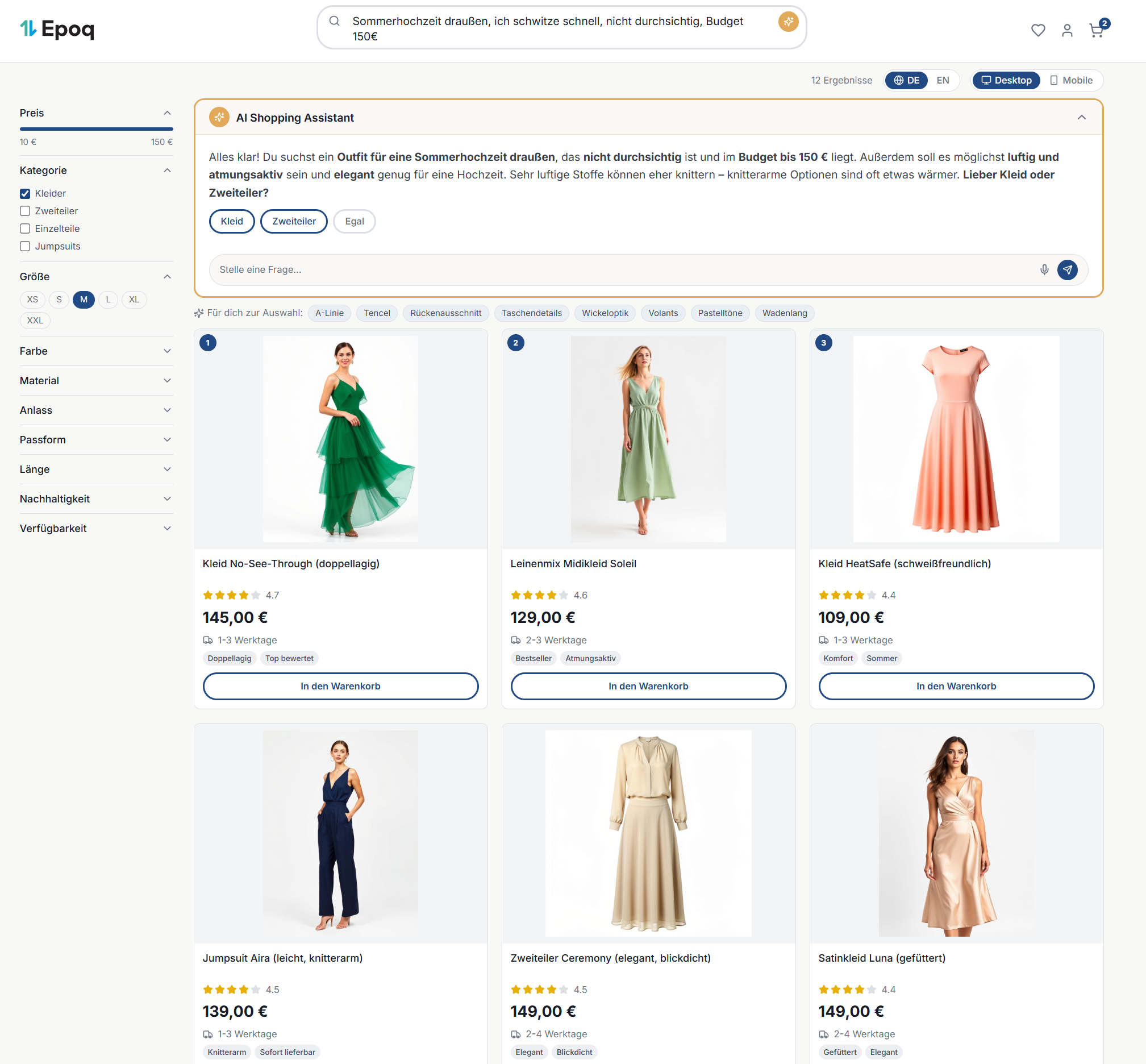
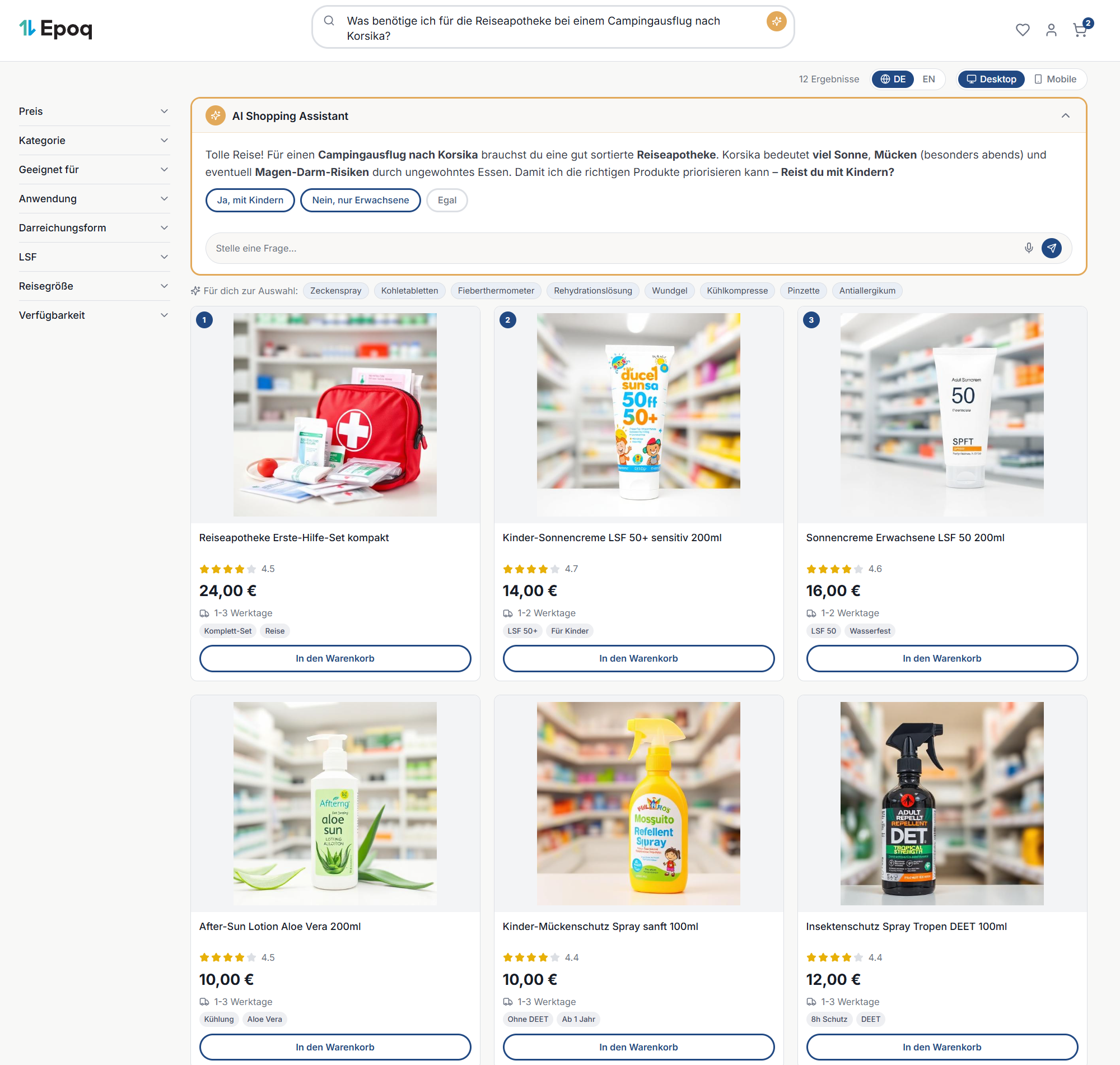
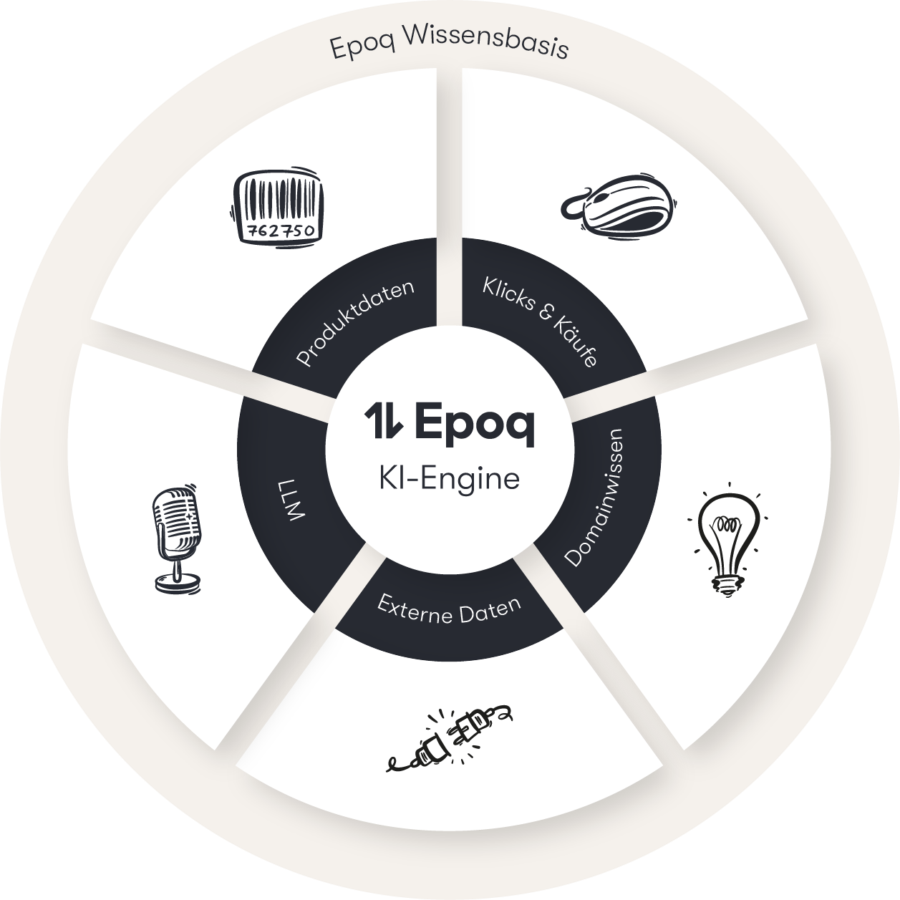
Before you start designing your online product advisor, it is important to build up a knowledge base for your online shop that uses an AI engine to advise your customers. This is because the product advisor should not only evaluate clicks on filters, but also take into account the entire click and purchase behavior of your online shopper. This allows it to always display products during the advisory process based on the individual preferences of the respective online shopper.

Knowledge base for AI-supported consulting in online shops

Prepare the product catalog

In order to build up the knowledge base, your product catalog is required first. However, before you submit the product catalog, you should check it and prepare it if necessary. This is because a high-quality data basis is essential for determining the right product for the need.

Example: A digital bicycle advisor asks the customer where they usually ride their bike. If the customer answers "in the city," the product catalog must contain a category with bicycles for city use so that the product advisor can recommend a suitable bicycle. Alternatively, the value "in the city" can be composed of attributes, such as tire type, etc.

Track click and purchase behavior

Next, click and purchase behavior data from your online store is required. By integrating a tracking code into your online store, the data is fed into your knowledge base (in compliance with data protection regulations). This is followed by the learning phase of the intelligent algorithms. The product data and click and purchase behavior are used to build up the knowledge base for the advice.

Design of the online product advisor

The design phase involves planning how to determine requirements. This mainly involves the questions that are asked of online shoppers in order to determine their needs. These questions form the basis for the online product advisor. At this point, it is worth noting that for self-explanatory, preference-driven products, possible tags are included instead of questions, which online shoppers can select. Therefore, the following concept mainly deals with function-driven products that require explanation.

1. Ask the right questions

Consider, for example, how needs are assessed in brick-and-mortar retail. What questions does a good salesperson ask to determine their customers' needs and offer them the right product?

Example: If a customer comes into the store and wants to buy running shoes, the salesperson will usually ask about the running surface: "Where do you run, in the forest or in the city?"

Depending on the answer, the salesperson recommends running shoes with a suitable outsole for the forest or the city. That's why you should run through the sales process for the selected product category and note down the appropriate questions in sequence. The number of questions and the depth of advice required will depend on your product category. Once you have determined all the questions, you need to compare the appropriate answer options with your product range to ensure that you have the right products for the answers.

2. Check that the questions are understandable.

Once all questions and answers have been finalized, you should check them for clarity. Are there any technical terms that need to be explained before the customer can make a choice? If your product and the associated questions and answers are very complex, it is advisable to include info icons. These provide your customers with additional information for better understanding. This ensures that your online shoppers have no difficulty selecting the right answer that leads to the appropriate product listing.

Example: If a customer has the option of selecting an expansion fold from a suitcase advisor, for example, this should be defined, as not everyone immediately knows what this means.

Info icon of the baggage advisor in the Lufthansa Worldshop explaining the term "expansion fold" (source: screenshot from worldshop.eu)¹

3. Define criteria for the results list

Products that differ significantly in terms of minor features should be immediately apparent to shop customers. An online product advisor offers a reasoning function for this purpose. The reasoning function helps shop customers to immediately distinguish between applicable and non-applicable product features. The applicable and non-applicable product features are visually displayed in a clear format. Shop visitors can quickly see which features are available for which products and which are not.

Reasoning function of the baggage advisor in the Lufthansa WorldShop (source: screenshot from worldshop.eu) ¹

This feature is important to prevent zero-hit pages from appearing. It also allows products to be displayed that do not match the answers 100%. You should therefore define the degree to which the criteria must be met in order to be displayed in the results list. This is because it may well be the case that there is no product in your product catalog that is a 100% match for your customer's needs.

You can display the degree to which requirements are met in the results list, e.g., using percentages or by listing included and excluded components. This allows your customer to see immediately which criteria the products in the results list meet and avoids any negative surprises after purchase if a criterion is not met. You should also consider the must-have and nice-to-have criteria globally for guided selling. This is because the answer to one question may influence the next questions.


Stay up to date on personalization: Sign up for the epoq newsletter.Register now!


Example: The appropriate neoprene suit is to be determined using guided selling. If, for example, male is selected as the gender in the first question, a jumpsuit should be excluded in advance in the next step, which deals with the shape, as this type is only available for women.

Visualization of the online product advisor

Visualization is the graphical form in which your consultant interacts with customers and presents information to them. It is also known as a graphical user interface (GUI). In this step, you should consider how you can use graphics to visualize your questions and possible answers to make it easier for your customers to answer the questions. This transforms clicking on a visualized answer into an intuitive filter. This makes the entire consultation process more pleasant for your customers and speeds it up.

Eterna shirt advisor with visualization of the four process steps (source: screenshot from eterna.de)

During guided selling, you should show your customer the steps ahead. This lets your customer know that they are not facing a lengthy consultation. Instead, you convey to them that this is a quick process to determine their needs.

Development of the code

During the development phase, you implement your concept technically. Here, you write the source code that makes the product advisor function and look the way you envisioned in your concept. You then insert the developed code into your online shop's test system and optimize it. The knowledge base generated as part of your preparatory measures is linked to the online product advisor. To ensure that your online shoppers receive a customized list of results based on their preferences and filter criteria after each click, an instant result function is used to take care of this. This is a list of results that adapts immediately when filters and individual preferences are activated or deactivated. Only when everything is to your satisfaction should you transfer it to your live shop.

Integration into the online store

To get your product advisor up and running, you now need to integrate it into your live system. After integration, you should check the entire advisory process again to rule out any bugs.

To ensure that your digital product advisor attracts the attention of your online shoppers, we recommend using a banner. However, you should not hide this in the navigation bar, but rather place it prominently in the relevant category above the results list and display it via the search function in the results list.

Banner notice for the shirt advisor at ETERNA (source: screenshot from eterna.de)

Conclusion: Expert advice similar to that provided in brick-and-mortar stores is possible.

An online product advisor can transfer the expert advice provided in brick-and-mortar stores to the online shop. The following are important here:

  • the preparatory measures,
  • A well-thought-out concept with the right questions about the product category,
  • visualization for the use of intuitive filters, and
  • A personalized and meaningful list of results after each step.

This allows you to determine the right product for each customer's needs and reduces the risk of returns. Your customer also gains the confidence they need to decide on a product and not abandon the purchase. An online product advisor actively supports you in increasing your online store sales.

Sources: ¹ Lufthansa WorldShop, ² Eterna

Would you like to learn more about how you can reduce the return rate in your online store?

Schedule a web demo on this topic now!

Daniela Ilincic
Head of Marketing
Daniela Ilincic is Head of Marketing at Epoq. She comes from a background in digital marketing, specializing in SEO and content marketing. She established the digital sales channel at Epoq, which she continues to optimize with her team. In addition to her work, she enjoys sharing market-relevant information on digital topics.