NEW: With the AI Shopping Assistant, you can offer LLM-based advice – for exciting purchasing decisions and a lower return rate

Did you know that...

65%

of e-commerce companies plan to implement LLM-based personalization solutions (Source: BytePlus, 2025)

27%

of LLM usage (the largest share) in 2024 was held by the retail/e-commerce sectors (GlobalNewswire, 2025)

30%

and more of API growth through 2026 will be driven by tools with LLMs (source: Gartner, 2024)

21%

of companies already using GenAI productively – an increase of 10% in 4 months (Source: Gartner, 2024)

The AI Shopping Assistant provides dialogue-based advice during the consideration phase.

The AI Shopping Assistant heralds a new era in e-commerce: personalized advice in online stores – just as if an experienced sales assistant were standing right next to the customer. This is made possible by a large language model (LLM) that processes natural text and voice input in chat – including combinable filter and sorting functions. The AI Shopping Assistant is integrated directly into the results list, offering maximum flexibility, seamless integration, and context-sensitive advice in real time.

Especially during the important consideration phase, it accurately identifies the needs of your online shoppers and filters out the right products from your range. It combines current product data with the click and purchase behavior of online shoppers to make recommendations even more precise and personalized.

This reduces uncertainty, promotes the right purchasing decision, and lowers the return rate. Your customer receives exactly the advice they need, finds the perfect product, and makes a purchase with confidence. That's exactly what Epoq Advise offers you.

During the consideration phase, potential customers actively compare different products in order to prepare for a purchase decision.

Take a closer look at how our AI Shopping Assistant works

Our AI Shopping Assistant combines modern technology with an intuitive shopping experience. Six clearly structured functional areas demonstrate how it makes digital shopping smarter, faster, and more personalized – without disrupting users' familiar behavior. The functionality can be fully integrated into existing processes and offers your online shoppers real added value. The familiar product search remains unchanged – online shoppers can decide for themselves at any time whether they want to use the AI Shopping Assistant or navigate in the traditional way. The whole thing is demonstrated using the example of a wine shop – but our AI technology is flexible and can be used for all industries and product groups.

1. Smart Start: How the AI Shopping Assistant works right from the start

Link to product search and autosuggest
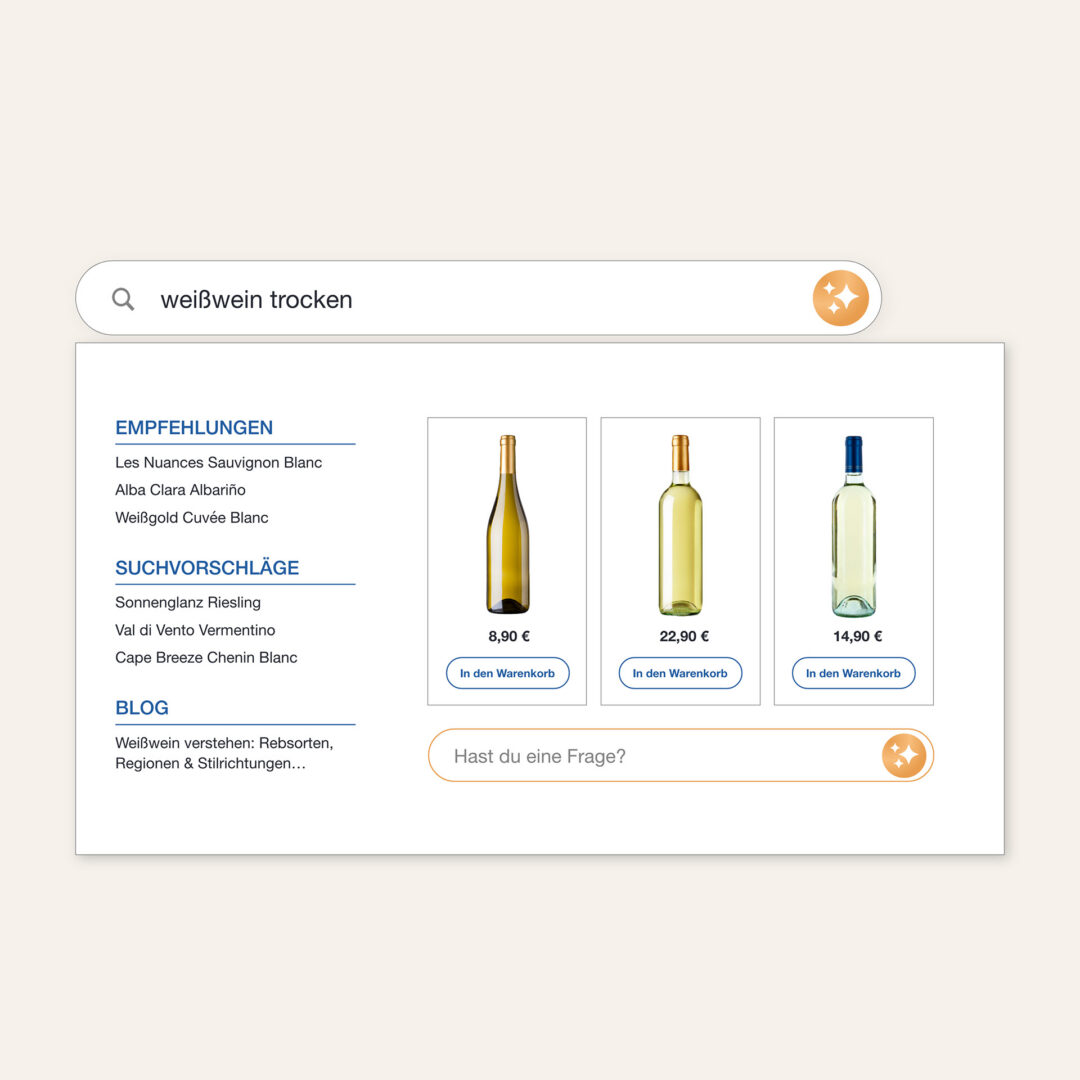
The AI Shopping Assistant is integrated directly into the product search. An icon in the search box indicates that personal assistance is available – clicking on it starts the consultation. This icon also appears in autosuggest next to matching suggestions, so online shoppers can access advice directly as they type – quickly, intuitively, and at just the right moment.

Free choice: classic search or personal assistance
Whether classic search or intelligent advice – online shoppers decide for themselves how they want to proceed. Clicking on the icon activates the AI Shopping Assistant and takes you directly to the search results list with the assistant integrated. Those who prefer to search without assistance can use the regular product search as usual – without any restrictions.

Advice on category pages
Optionally, the AI Shopping Assistant can also be integrated into category pages. When a specific category is clicked on, the bot appears in the header in a context-sensitive manner – this way, the advice begins directly in the appropriate subject area, supported by the online shopper's previous interaction.

Example of a search function with autosuggest in a wine shop, where an icon draws attention to the available AI shopping assistant.

2. Smart Conversation: From the start of the conversation to product advice

Conversation starters to help you get started
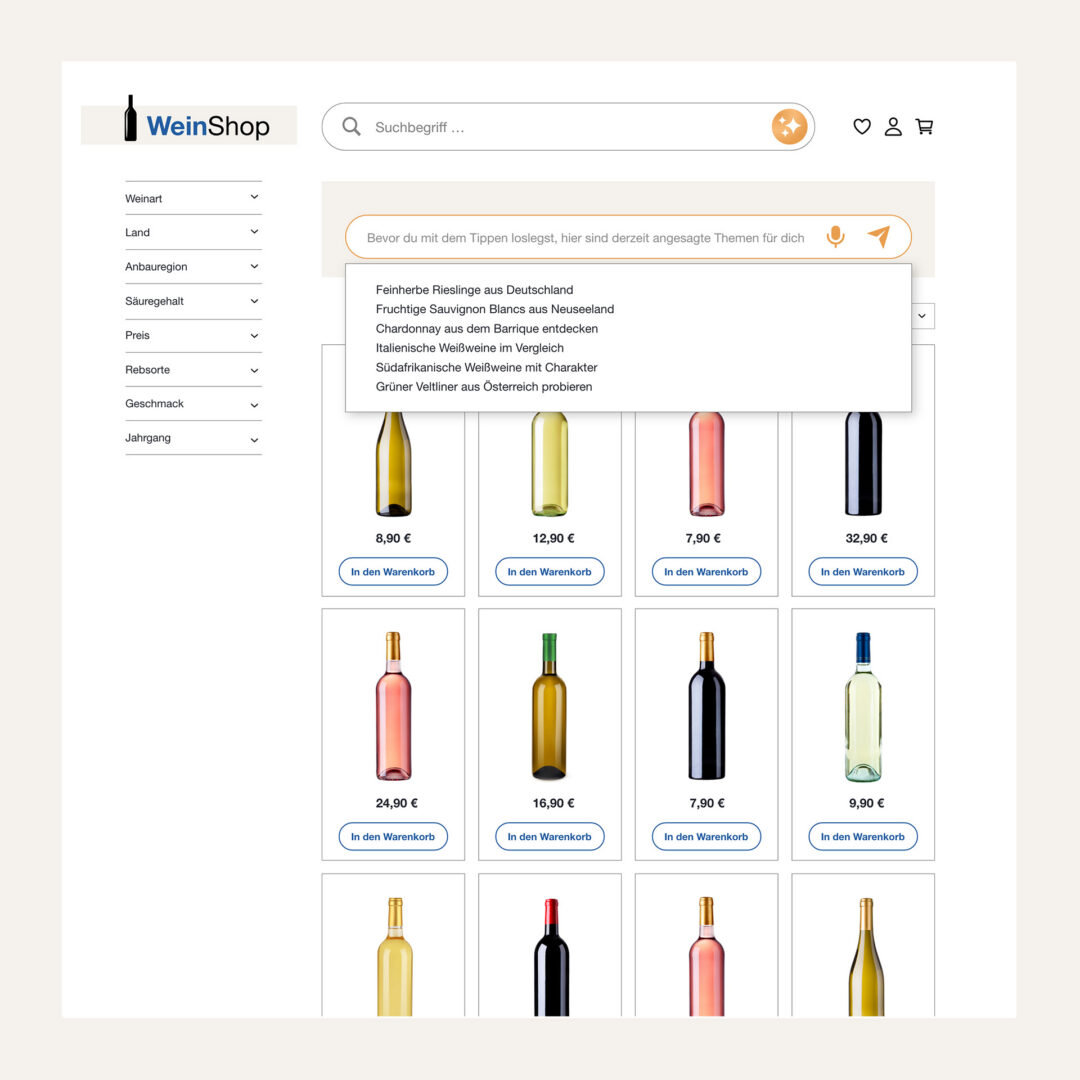
When you first start using the AI Shopping Assistant, it suggests suitable conversation starters – such as "Dry Rieslings from Germany" or "Italian white wines compared." These suggestions are based on product data and previous click and purchase behavior, and are dynamically generated by our AI engine. Once you get started, they no longer appear, keeping the experience focused.

Natural language communication and product lists
As soon as a question is asked, the assistant responds in real time with a short, helpful answer in natural language and a product list relevant to the question. The behavior of online shoppers in the store – such as previous clicks, products viewed, or purchases – influences the weighting and selection of the products suggested.

Example of a wine shop with an AI shopping assistant that provides suitable conversation starters such as

3. Contextual Understanding: How consulting becomes truly intelligent

Understanding complex queries (semantics)
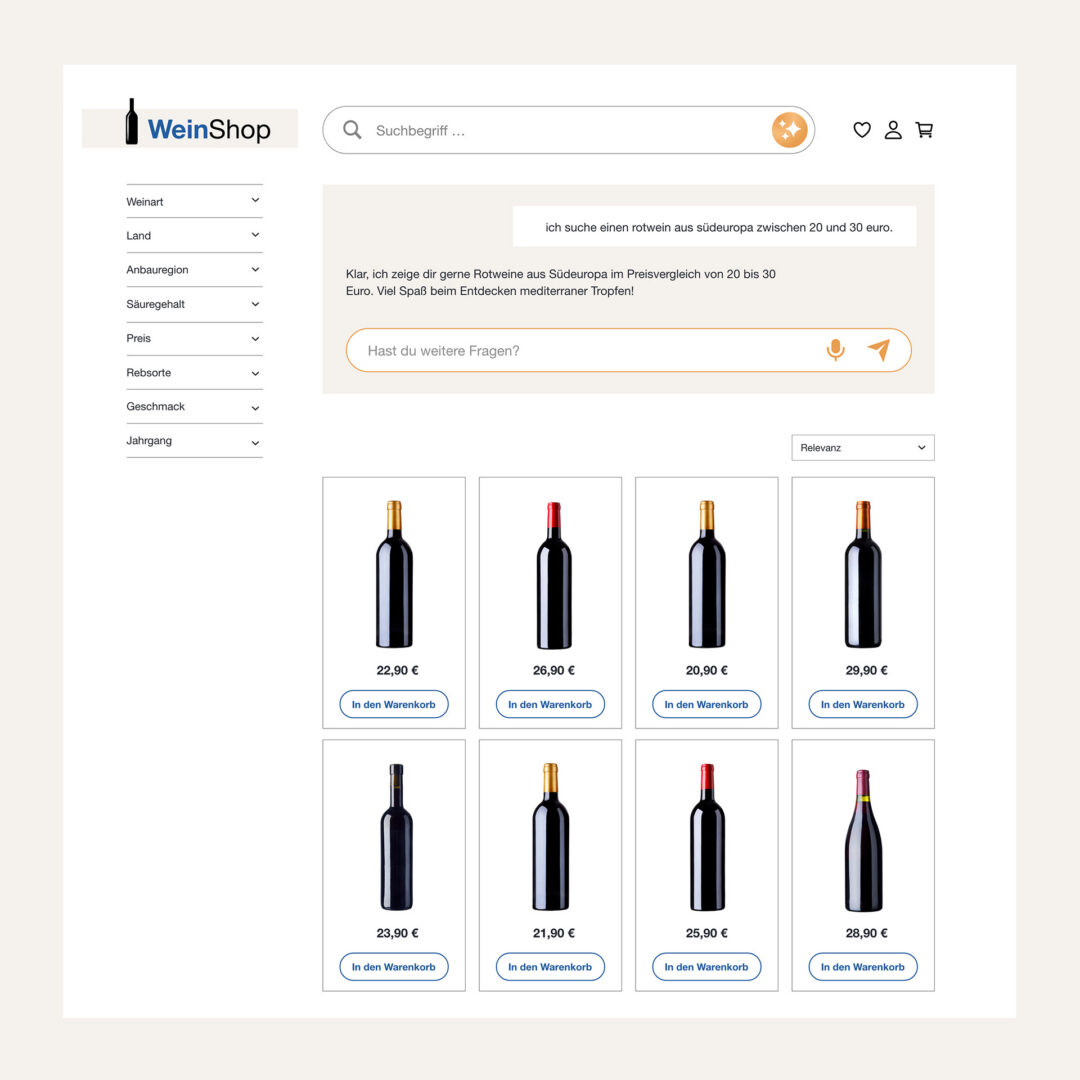
The AI Shopping Assistant also understands complex queries with multiple criteria – for example: "I'm looking for a red wine from Southern Europe between $20 and $30." It recognizes intentions and restrictions and formulates appropriate recommendations – for example: "Sure, I'd be happy to show you red wines from Southern Europe in the $20 to $30 price range. Have fun discovering Mediterranean wines!"

Colloquial language and error detection
Even with unclear or incorrect input, the response remains accurate. Spelling mistakes such as "Chadonney" or colloquial language (such as "Sis" instead of sister) are interpreted correctly, as are regional dialects ("Hasch du Päzer Woi?").

Adaptation to language style and user behavior
The assistant adapts to the language of the online shopper. Those who use informal language are addressed informally, while those who use formal language are addressed formally. Brand-specific tones can also be defined. In addition, click and purchase behavior can be used for better interpretation – for example, to respond more specifically to individual preferences and suggest suitable alternatives.

Example of a wine shop with an AI shopping assistant that responds to inquiries

4. Intelligent Results Lists: Dynamic, explanatory, familiar

Dynamic tags and full filter and sort function
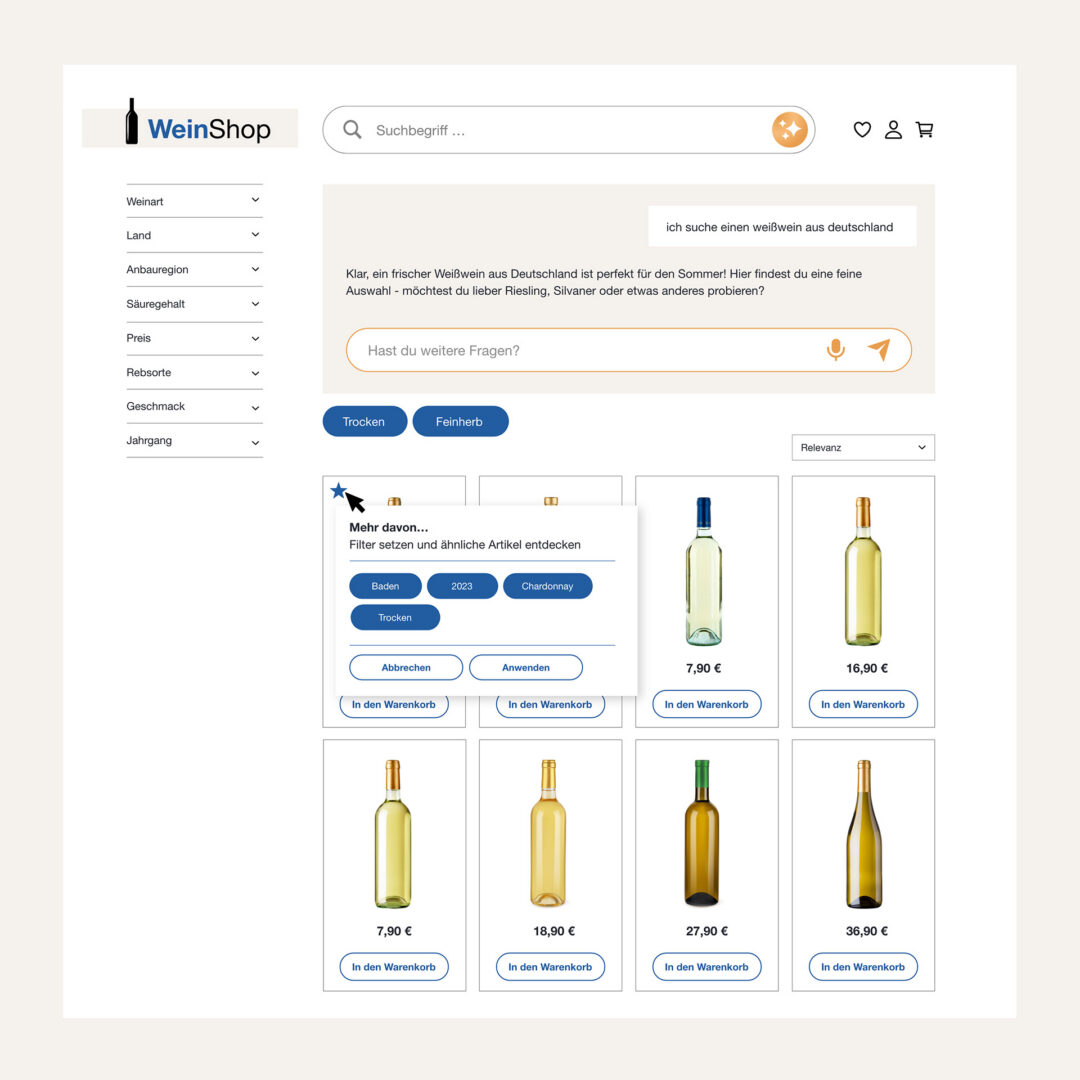
Tags such as "dry" or "semi-dry" are displayed with the results list and help with quick filtering – without any new input. These dynamic tags can be combined with the classic filters and sort function, which remain fully usable – for a familiar user experience. When hovering over products, additional tags such as vintage, growing region, or grape variety are displayed. Clicking on them filters the results list directly, allowing for even faster navigation.

Diverse results instead of limited suggestions
The results lists can show more than just five suggestions – unlike many chatbots, our bot is directly integrated into the results list, providing enough space for product lists. Products with complementary relevance can also appear, tagged with explanatory tags such as "whiskey glasses" for the search term "whiskey."

Familiar experience, intelligently enhanced
Click and purchase behavior is factored into the weighting for displaying the results list. This produces personalized, context-related results – without replacing familiar behavior, as with classic search.

Example of a wine shop with an AI shopping assistant that responds to inquiries

5. Content Discovery: Answers to all questions about the product

Content instead of dead ends
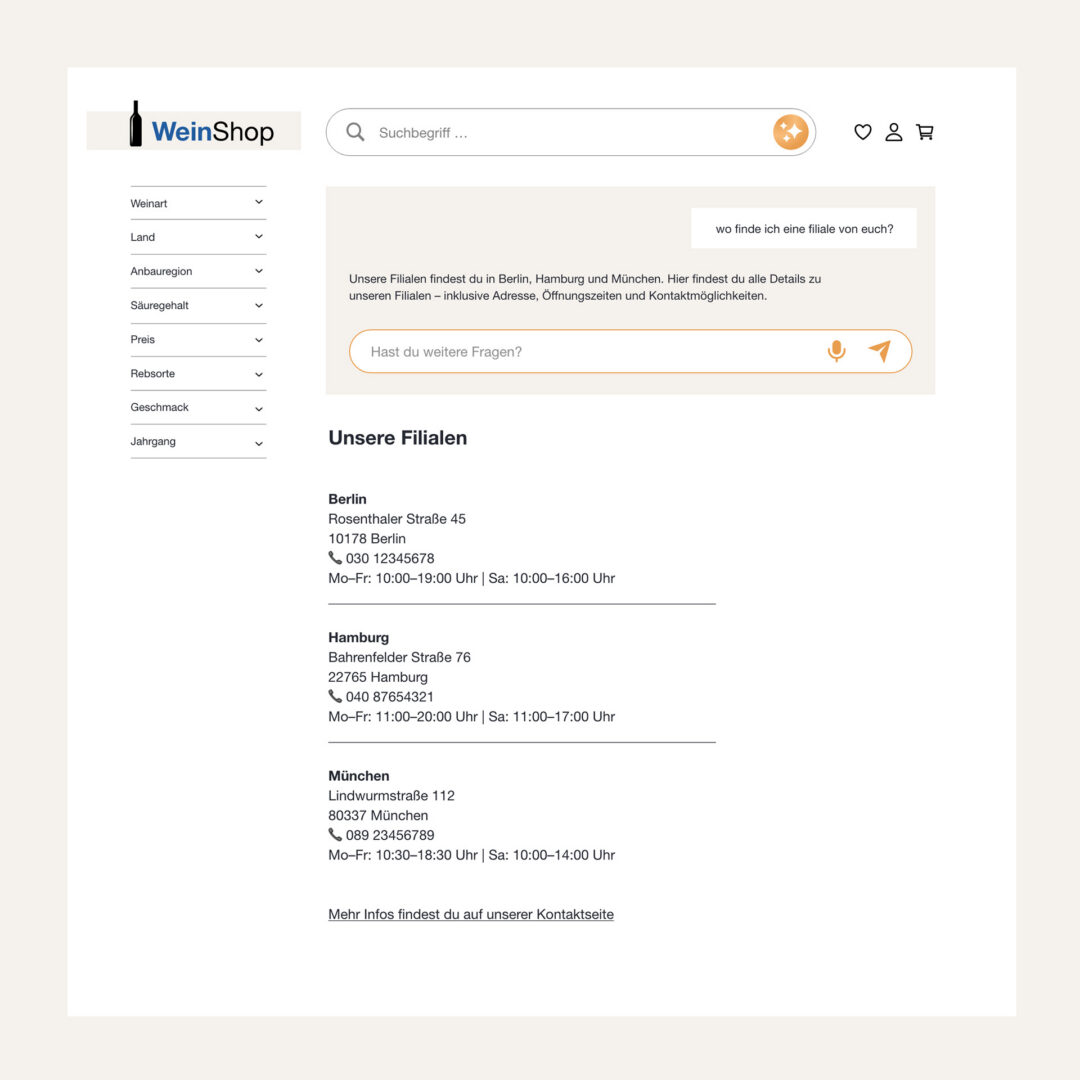
The AI Shopping Assistant not only answers questions about products, but also about general topics – such as "Where can I find your store?" or "What is your legal notice?" The answers link directly to relevant pages, e.g., a blog, an information page, or a service page.

Intelligently linked content
This turns product searches into thematic orientation. The assistant recognizes when content rather than products are required and automatically suggests suitable articles or help content.

Recommendations beyond products
Personal preferences are also taken into account: depending on click and purchase behavior, the assistant recommends, for example, themed worlds, promotions, or advice content. This creates a seamless shopping experience with real added value – beyond the product itself.

Example of a wine shop with an AI shopping assistant that responds to the question

6. Goal achieved: From the hit directly to the product page or into the shopping cart

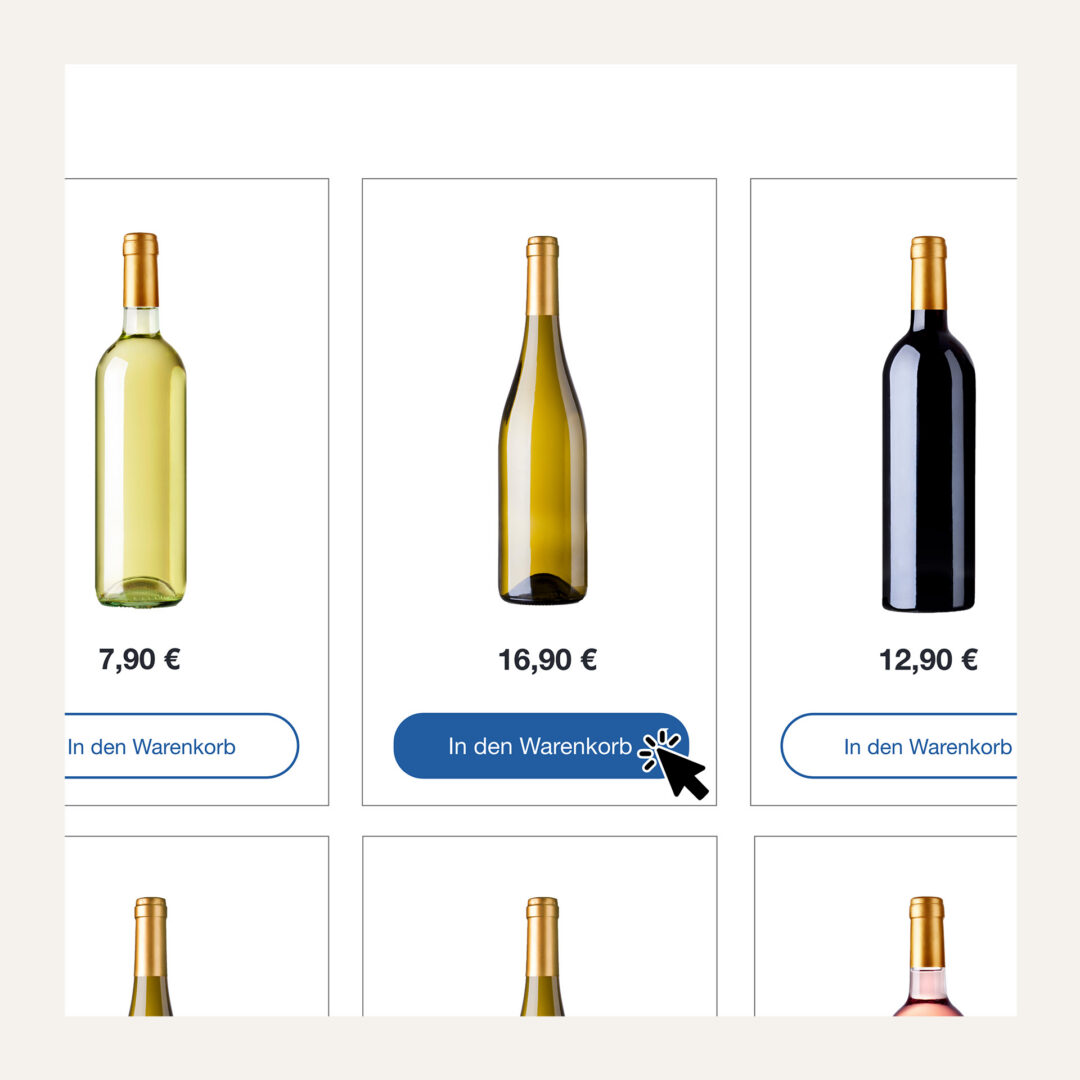
Once the user has found the right product, it can be added to the shopping cart directly from the results list or explored further on the product detail page – without media discontinuity or context change.

The AI Shopping Assistant is therefore not a detour, but a shortcut to the right product – seamlessly integrated into the familiar purchasing process.

Example of a wine shop with an AI shopping assistant, where customers can add products from the results list directly to their shopping cart.

Dialog-based advice directly in the online shop – simple, fast, tailored

"The AI Shopping Assistant combines modern LLM technology with our AI engine, which we have been developing for 20 years, and supplements classic search in online stores with dialogue-based advice. Users can search in the same way they are used to with ChatGPT – in natural language, even for abstract questions. The system understands complex relationships and provides suitable product recommendations – for a flexible, hybrid search experience that better suits the diversity of today's user needs."

Stephan Kölle | CTO | epoq internet services GmbH

Our AI Shopping Assistant offers you these features

Context

The AI Shopping Assistant also understands complex queries with multiple conditions and restrictions. This allows users to search precisely, for example, "wine from Southern Europe, but not white wine, under $20," and still receive relevant results.

Reasoning

The AI recognizes connections between search terms, user intentions, and preferences. Instead of just responding to individual keywords, it thinks for itself and provides relevant product recommendations that match the overall desire.

Error Tolerance

The assistant also interprets typos, colloquial language, and regional dialects correctly. This ensures that user questions remain understandable and are answered reliably, even if they are not perfectly formulated.

Language Adaptation

The assistant automatically recognizes whether users are informal or formal and adjusts the tone accordingly – for a natural and customer-oriented approach.

Brand Tone

In addition, the message can be adapted to the desired brand style so that communication always matches the brand identity.

Memory Function

The AI Shopping Assistant recognizes returning users and remembers preferences or previous conversations in order to continue the consultation in a meaningful way and make it even more personalized.

Voice Search

In addition to traditional text input, voice search offers a convenient and modern alternative for finding products using voice commands.

Conversation Starter

The AI Shopping Assistant offers smart introductory questions that are tailored to the situation, season, or target group, making it easier to start a conversation and actively guiding users through the store.

Ranking

In addition to product data, the click and purchase behavior of the respective online shopper is taken into account when displaying the results lists, so that the most suitable products are displayed in real time.

Result Set

The results lists show significantly more than the usual five suggestions. Products with only partial relevance can also be displayed, ensuring that the selection remains diverse and transparent.

Dynamic Tags

Intelligent tags such as "dry" or "under €20" allow users to quickly filter results without having to retype anything. When hovering over a tag, additional tags such as vintage or growing region appear – one click adjusts the list directly.

Classic Filters / Sorting

In addition to the dynamic tags, all the usual filters, sorting options, and other shopping elements remain fully functional and combinable.

Content

The assistant not only provides product recommendations, but also relevant information such as FAQs, service pages, and advice texts – for comprehensive guidance.

Merchandising

Based on user behavior, relevant topics, promotions, and campaigns are displayed to enrich and personalize the shopping experience.

Shopping Cart

Once the user has found the right product, it can be added to the shopping cart directly from the recommendation – without any media disruption or change of context.

The AI engine of our AI Shopping Assistant: LLM meets smart personalization

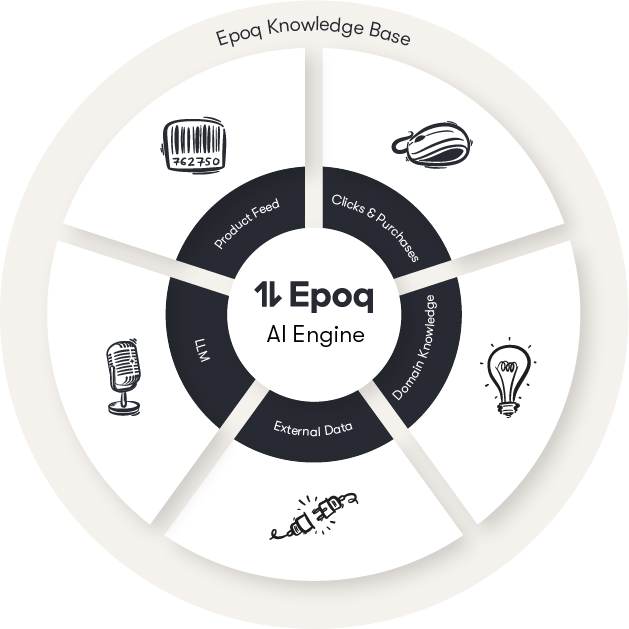
Our AI engine is at the heart of the AI Shopping Assistant. It combines the power of LLMs for natural and contextual speech output with your store's individual data – such as your product catalog, customer click and purchase behavior, and your domain knowledge. This creates an intelligent knowledge base that delivers accurate product recommendations while responding naturally to queries.

Since the AI Shopping Assistant is a module of our personalization software, the knowledge base that has already been generated can be seamlessly used for other modules. This allows for flexible personalization of additional touchpoints in the store. This combination of state-of-the-art AI technology and data-driven personalization ensures a unique, individually tailored shopping experience.

Learn more about our AI Technology.

Check out our insights on digital consulting

For many years, we have been supporting online shoppers with digital advice – initially in the form of guided selling and visual filters. This expertise has been incorporated into the further development of the AI Shopping Assistant. The result: an intelligent, dialogue-based shopping companion that provides personal support directly in the product search.

Merchandising control: Our AI Shopping Assistant follows your business logic

Our AI Shopping Assistant adapts not only to your customers, but also to you. In addition to automatic, AI-based product recommendations, you can incorporate your own specific requirements. You can control the results list using integrated merchandising options. The combination of intelligent personalization and manual control makes the AI Shopping Assistant a highly flexible sales tool – tailored to your product range, your strategy, and your KPIs.

Prioritize & Push

Determine which products, brands, or categories should be displayed preferentially and highlighted specifically.

Business Objectives

Define which business objectives – such as inventory clearance, margin strength, or new products – should be taken into account when displaying products.

Rules

Define which rules should apply to specific use cases or target groups.

Customer Targeting: Our AI Shopping Assistant also thinks in terms of target groups

The AI Shopping Assistant doesn't just think in terms of products – it also thinks in terms of target groups. You decide who gets to see what: personally, segmented, or according to strategic priorities.

1:1 Personalization

Recommendations are based on the behavior of each individual user – in real time. This results in personalized advice that really fits.

Segment-based Targeting

Target specific groups: new customers, frequent buyers, bargain hunters, or those interested in seasonal items – everyone receives relevant content and product recommendations.

Product-based Targeting

Want to put the spotlight on specific products? The AI Shopping Assistant connects your business goals with the right target group – automatically and controllably.

Ready to go in 3 steps – this is how the integration of the AI Shopping Assistant works

Generation of a knowledge base

In order to tailor the AI Shopping Assistant optimally to your products, we need your product catalog in XML or CSV format, as well as data on the click and purchase behavior of your shop customers. We collect this behavioral data via a tracking code that you simply integrate into your online shop.

01

Integration into your shop system

We will discuss your visual ideas together and send you the div element as a placeholder for the front end of the AI Shopping Assistant. You can then integrate this into your shop system at the desired location.

02

Live consultation start in the shop

Once everything is integrated, your customers will have access to personalized, AI-powered advice – perfectly embedded in the customer journey of your online store.

03
Epoq Control Desk

Monitoring and control of the AI Shopping Assistant

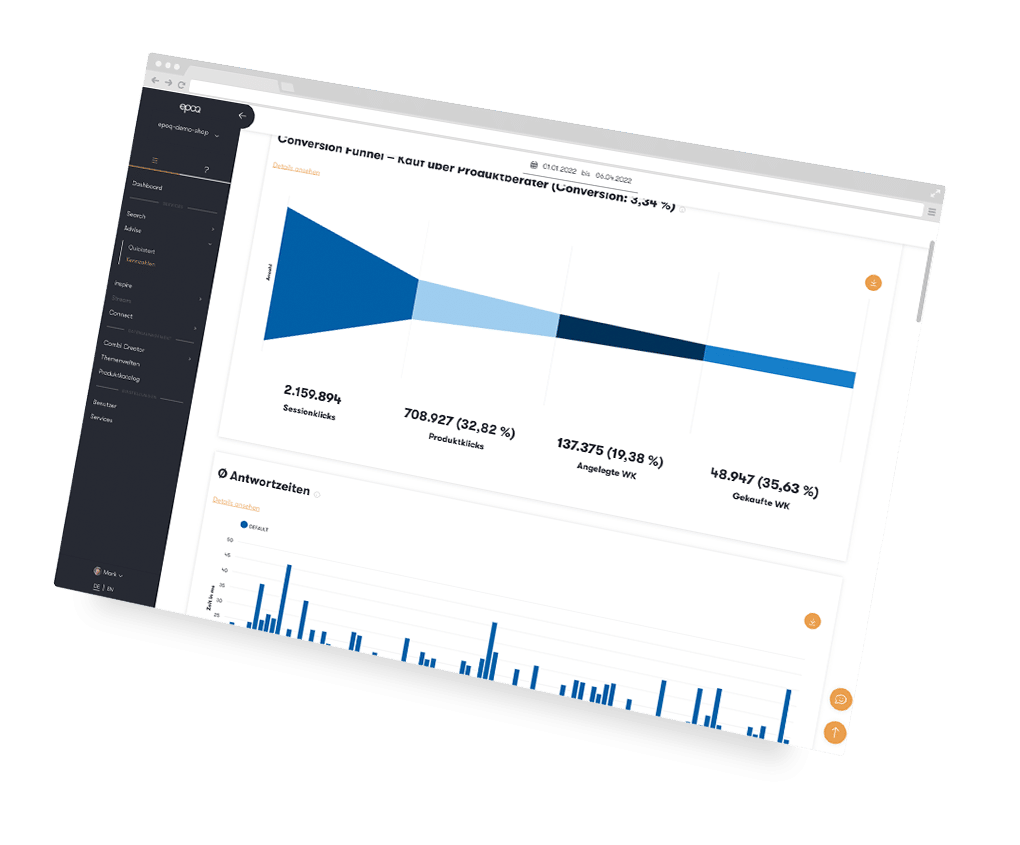
The Epoq Control Desk allows you to monitor and control various KPIs of your digital product advisor.

Key Figures

In the "Key Figures" tab, you can view various KPIs for your digital product advisor: click performance, sales rate, conversion funnel, response times, and session duration.

When is it worthwhile for you to use an AI Shopping Assistant?

Consulting

Are your online shoppers unsure which product is right for them? The AI Shopping Assistant proactively supports them in their selection – in real time, personally, and around the clock.

Bad Buys

You are experiencing high returns in certain product categories. These are often caused by false expectations. Our assistant recommends suitable products based on needs, thereby reducing mispurchases from the outset.

Complexity

Does your product range require intensive consultation or explanation? The AI Shopping Assistant helps make products understandable and supports your online shoppers in their purchasing decisions.

Want to help your online shoppers make the right choice?

With our AI Shopping Assistant, you can leverage technological advances to reduce returns and increase customer satisfaction.

Popular blog articles on digital product advice

A woman is holding a smartphone with a live chat window open on it.
Reduce Return Rate
Live chat in e-commerce vs. AI-supported consulting: This is how customer service works today

Online retailers invest heavily in generating traffic. But what happens to potential customers if they don't find what they're looking for in your online store? To prevent your prospects from simply leaving, it's important to offer them the best possible sales advice. Especially with large product ranges, individual advice is often needed so that customers can find the perfect product and don't end up returning it in frustration. Live chat offers an effective form of customer advice and support here.

Learn more
The picture shows a woman taking another person by the hand and leading them through the streets.
Reduce Return Rate
Guided Selling Software 2.0: The new era of digital purchasing advice

E-commerce is constantly evolving. The same applies to customers' expectations of competent, personal advice in online retail. In recent years, classic guided selling software has proven that structured assistance with product selection increases conversion rates and reduces returns. However, rigid decision trees and visual filters are not always sufficient. What is needed is a new form of digital assistance – interactive, dialogue-oriented, and intuitive. The concept of AI conversational commerce and AI shopping assistants offers exactly that: customers chat with artificial intelligence via voice or text instead of navigating through predefined click paths. In this article, learn what lies behind the term guided selling software and how the new generation of intelligent assistants is leveraging and further developing its strengths.

Learn more
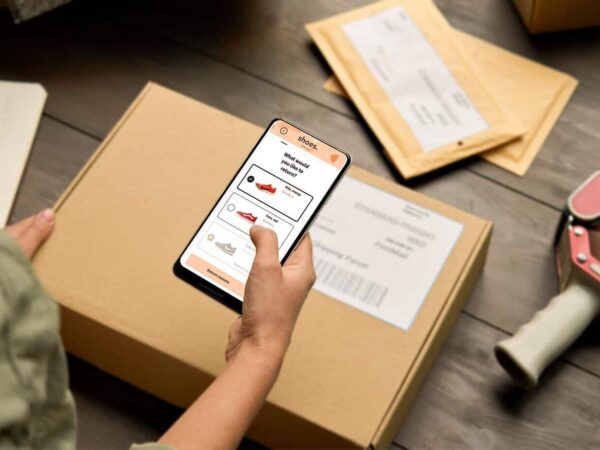
The image shows a customer returning their order via the returns portal.
Reduce Return Rate
How you can reduce returns with the help of a returns portal

Returns are often a tiresome issue—both for shop operators and customers, and ultimately for the environment. However, if you make the right adjustments, you can use returns to your advantage and reduce the return rate in a targeted manner. In this guest post, Vinzenz from our partner Sendcloud reveals how everyone can win in the end, despite what appears to be a hopeless lose-lose-lose situation.

Learn more
This image shows a woman's hand typing on a tablet.
Reduce Return Rate
Online product advisor: Help your customers choose the right product

With an online product advisor, you can help your customers choose the right product for their needs. This reduces high return and cart abandonment rates and increases your online store's sales. The online product advisor brings expert advice from brick-and-mortar stores to the digital world. But what is the best way to implement the perfect online product advisor in your online store? That's what this article is about.

Learn more
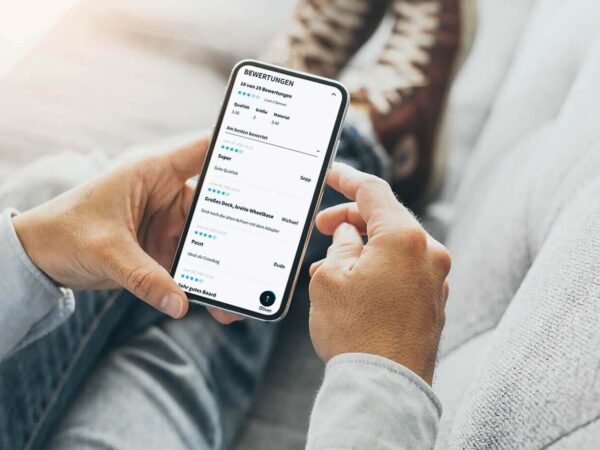
A person is holding a smartphone in their hand, displaying several product reviews.
Reduce Return Rate
Product reviews in online shops: an effective tool to support purchasing decisions

When shopping online, customers cannot examine the goods with their own eyes or check their quality by touching them. They therefore have to rely on product photos and descriptions provided by the sellers. Product reviews help your buyers to find out whether the product in question meets their expectations. Below, you will learn how product reviews can help you optimize your online store and reduce your return rate.

Learn more
The image shows a mail carrier contributing to the returns process and bringing back packages.
Reduce Return Rate
Optimizing the returns process: Creating positive shopping experiences despite product returns

We've all been there. The product you ordered doesn't fit, you don't like it, or it arrived damaged – so obviously, you send the package back. Regardless of the reason for the return, users expect a quick and easy returns process. After all, the customer experience doesn't end with the delivery of the goods. A smooth returns process contributes significantly to customer satisfaction. To ensure that you can offer your customers a flawless returns process, it is important to optimize it. We will now show you what customers expect from the returns process in e-commerce and how you can meet these expectations.

Learn more
Consulting situation in a perfume store as a pictorial representation of personal, digital customer dialogue in conversational commerce.
Reduce Return Rate
More personal, faster, closer: How conversational commerce is transforming digital shopping

Conversational commerce is one of the most important drivers in digital commerce. It is gaining importance not only through the spread of chatbots, but above all through rapid advances in artificial intelligence—especially in powerful large language models. These technologies significantly enhance previously rigid systems and generic responses. More and more customers expect fast, personalized, and simple interactions – 24/7 and on all relevant channels. With intelligent, dialogue-based solutions, you can improve the shopping experience through greater proximity, trust, and efficiency. Conversational commerce is thus changing not only purchasing behavior, but also the way companies communicate with their target groups. In this article, we show why conversational commerce is so much more than simple chatbots today and what potential lies in the new, truly intelligent dialogue solutions.

Learn more
This picture shows an open shoebox with a new pair of sneakers. It's about returns management.
Reduce Return Rate
Digital returns management begins in the online store

Returns management is an important part of digital commerce. In the fashion industry, for example, a return rate of up to 50%¹ is not uncommon, meaning that almost every second order is returned in whole or in part. Even without knowing the exact figures, it is understandable that this results in a huge amount of costs. It is therefore no surprise that e-commerce managers go to great lengths to reduce the return rate. In this article, we show you how this can be done even before the purchase and provide lots of other useful information on the topic.

Learn more
01 / 8