Back to overview
  • Reduce Return Rate

Optimizing the returns process: Creating positive shopping experiences despite product returns

  • Published May 25, 2020
  • Sarah Birk
  • Reading time: 13 min.

We've all been there. The product you ordered doesn't fit, you don't like it, or it arrived damaged – so obviously, you send the package back. Regardless of the reason for the return, users expect a quick and easy returns process. After all, the customer experience doesn't end with the delivery of the goods. A smooth returns process contributes significantly to customer satisfaction. To ensure that you can offer your customers a flawless returns process, it is important to optimize it. We will now show you what customers expect from the returns process in e-commerce and how you can meet these expectations.

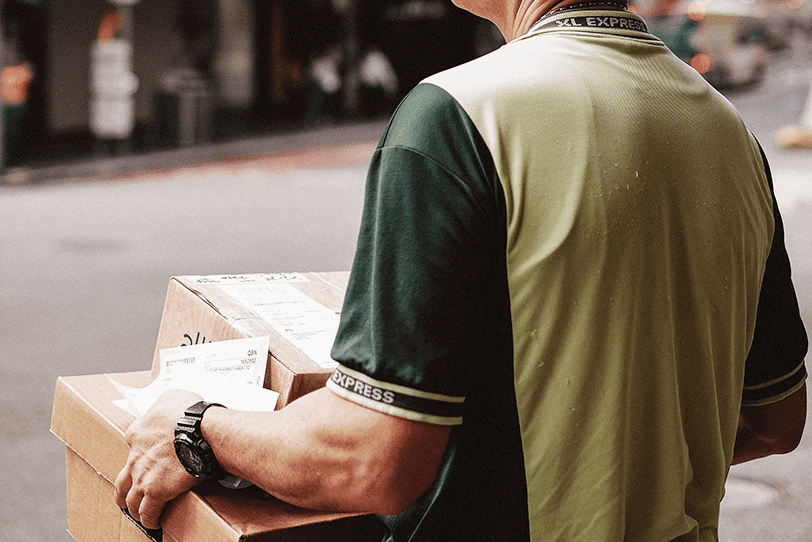
The image shows a mail carrier contributing to the returns process and bringing back packages.

The returns process as part of the shipping process

Shipping involves several steps: sending, tracking, and returning the package or goods. Customers have high expectations for each of these three steps.

  • Shipping: Customers expect delivery as quickly as possible and preferably free of charge, or at least free delivery above a certain minimum order value. In addition, the goods must be securely packaged and arrive undamaged at the customer's address.
  • Tracking: Customers want to be informed about the status of their order at all times. Information about the shipment status allows them to track where their package is at any given moment.
  • Returns: Customers want to be able to return products they do not wish to keep in a simple manner and, if possible, without incurring any costs.

In this article, we will focus on the last of these three aspects: returns, and look at various measures you can take to optimize your returns process.

This speaks in favor of optimizing the returns process.

Nowadays, many online shoppers buy several products to choose from and already know when making their purchase decision that they will not keep all the products in their order. Optimizing the returns process is crucial to ensuring that these online shoppers become satisfied customers and shop at your online store again. We will now show you the reasons for optimization.

Meeting customer expectations

Customers have high expectations of online shops – not only in terms of product selection and quality, but also when it comes to returning goods. Complicated procedures, shipping costs for the buyer, or a lack of return options can lead to abandoned purchases or potential customers choosing another provider. A smooth returns process is therefore crucial to meeting customer expectations and winning over online shoppers.

Increase customer satisfaction

In addition, easy handling of returns and tolerant return policies lead to increased customer satisfaction. This is because the customer's experience with the returns process has a direct impact on customer loyalty. With a flawless returns process, you can convince buyers of your reliability as a retailer and, in the best case scenario, welcome them back to your online store as customers next time.

Building security and trust

The certainty of being able to return a product easily if necessary ensures a better feeling as well as trust and security when shopping. If this option is not available, or if the returns process is complicated or associated with high costs, customers may prefer to place their order in another shop from the outset.

Creating positive shopping experiences

The user experience therefore plays a decisive role not only in the ordering process, but also when it comes to returns. It is therefore important to design this process in such a way that the customer has a positive shopping experience despite returning goods. This can increase customer loyalty and the rate of repeat customers.

Conserve resources

If the returns process is not simple and transparent, it is highly likely that customer service will receive inquiries that require time and money to resolve. It is therefore also advantageous from the shop operator's point of view to make the returns process as convenient as possible in order to save resources.

Reduce capital commitment

A fast and smooth returns process allows you to avoid long periods during which the goods remain with the customer and you are unable to sell them elsewhere. If this is the case, your capital is tied up. An optimized returns process therefore means that the goods are back in stock more quickly and thus available for other customers.


Stay up to date on personalization: Sign up for the epoq newsletter. Register now!


Tips for optimizing the returns process

Since returns are probably never completely avoidable in online retail, you as a shop operator should at least try to keep the return rate as low as possible. You can also optimize processes and factors that are directly related to returns. We will show you some measures you can take to optimize your returns process.

Avoid returns in advance

If returns are avoided in advance and fewer products are sent back, this also has a positive effect on the returns process. After all, the fewer returns there are, the easier they are to handle.

You can use these options to keep the return rate as low as possible:

  • Comprehensive product information and a detailed description of the item with high-quality images, realistic color representation, and videos showing how to use the product help your customers get as accurate an idea of the product as possible and avoid uncertainty.
  • Size charts and FAQs about fit are extremely helpful, especially in the fashion industry. They help customers choose the right product in the right size.
  • Customer reviews, experiences, and test reports from other buyers help online shoppers obtain first-hand information and feedback. Many users trust these customer reviews, which also help them find the right product that meets their requirements.
  • Consultation options in the form of direct contact with shop service staff can answer any questions and help customers choose products. Communication can take place via a service hotline or live chat on the shop website, for example. The consultation function can also be performed by an intuitive, dialogue-based AI shopping assistant. This assistant processes natural text and voice input in the chat, accurately identifies the needs of your online shoppers, and suggests suitable products from your range – similar to a salesperson in a brick-and-mortar store. By combining current product data with customers' click and purchase behavior, you can provide professional, personalized advice that builds trust and reduces returns.
  • Securely packaged goods and a note indicating fragile contents help ensure that the goods arrive intact at your customer's address and that returns for this reason are avoided.

We have already summarized further information on avoiding returns, processing returns, and checking returns for you in the blog article Digital returns management begins in the online store.

Clearly communicate return policies

Ensure clarity and transparency throughout the entire returns process and clearly communicate the return conditions. By offering more goodwill (e.g., in the form of a longer return period for orders) or special services that go beyond the legal requirements, you can set yourself apart from the competition. After all, a convenient returns process is a good argument for convincing potential customers to choose you as their retailer.

So make sure that the return policy is easy to find and easy to understand.

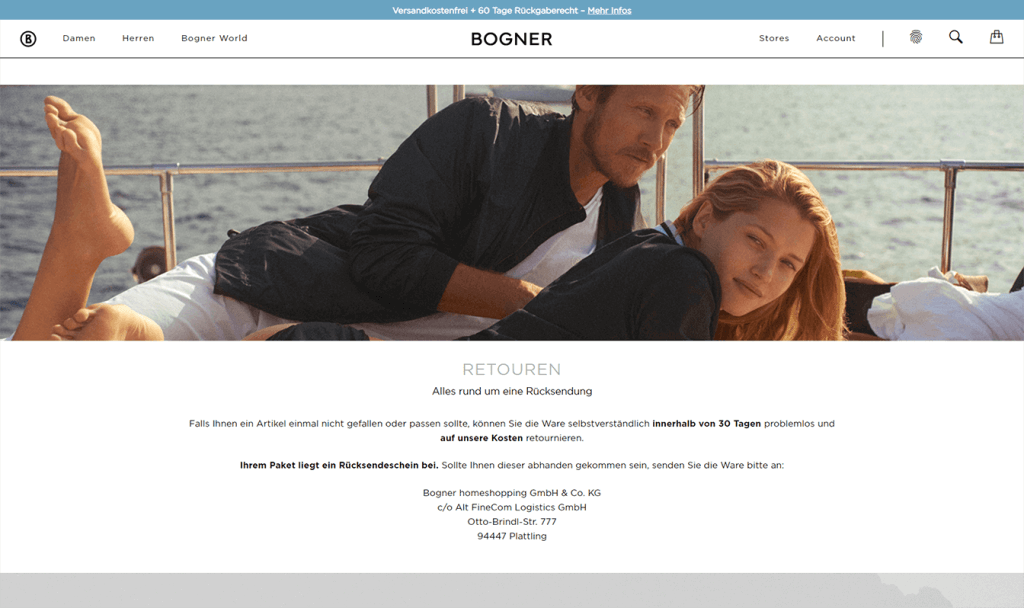
In Bogner's online shop, online shoppers will find the Returns section in the footer under Customer Service. Clicking on this will take them to an overview page with important information about returns, such as the return period and information about the return slip. This makes the terms and conditions easily accessible and clearly formulated.

Overview of all important information regarding the return of products purchased from the Bogner online shop (source: screenshot from bogner.com)

Provide a return label

A return label is required so that your buyers can return the product they ordered. To ensure an optimized returns process, it should be easily accessible. There are several ways you can provide a return label.

Return slip enclosed in the package

Firstly, you can include the return label with your packages in advance. This has the advantage that your customers have the label immediately available and can fill it out quickly. Having some fields pre-filled saves them additional time and effort. Including return labels in the package also eliminates the need for the buyer to print them out. It also saves them from having to start up their computer and log in to a portal. As an extra customer service feature, you can also list nearby parcel shops (based on the customer's delivery address) on the back of the return label so that the customer can see at a glance where they can return their package. However, including a return label may have the unintended effect of encouraging the customer to return the goods.

Return label for printing

The other option is to make the return label available for printing in your online shop or in a separate returns portal. This has the advantage that the label is only printed when it is actually needed. It also prevents the label enclosed in the package from being accidentally discarded beforehand.

In addition to helpful FAQs about returns and complaints, Fackelmann offers its online shoppers a direct link to a contact form. Buyers can simply fill out this form and select the reason for the return and the item they wish to return. They will then receive an email with the return slip and the return label.
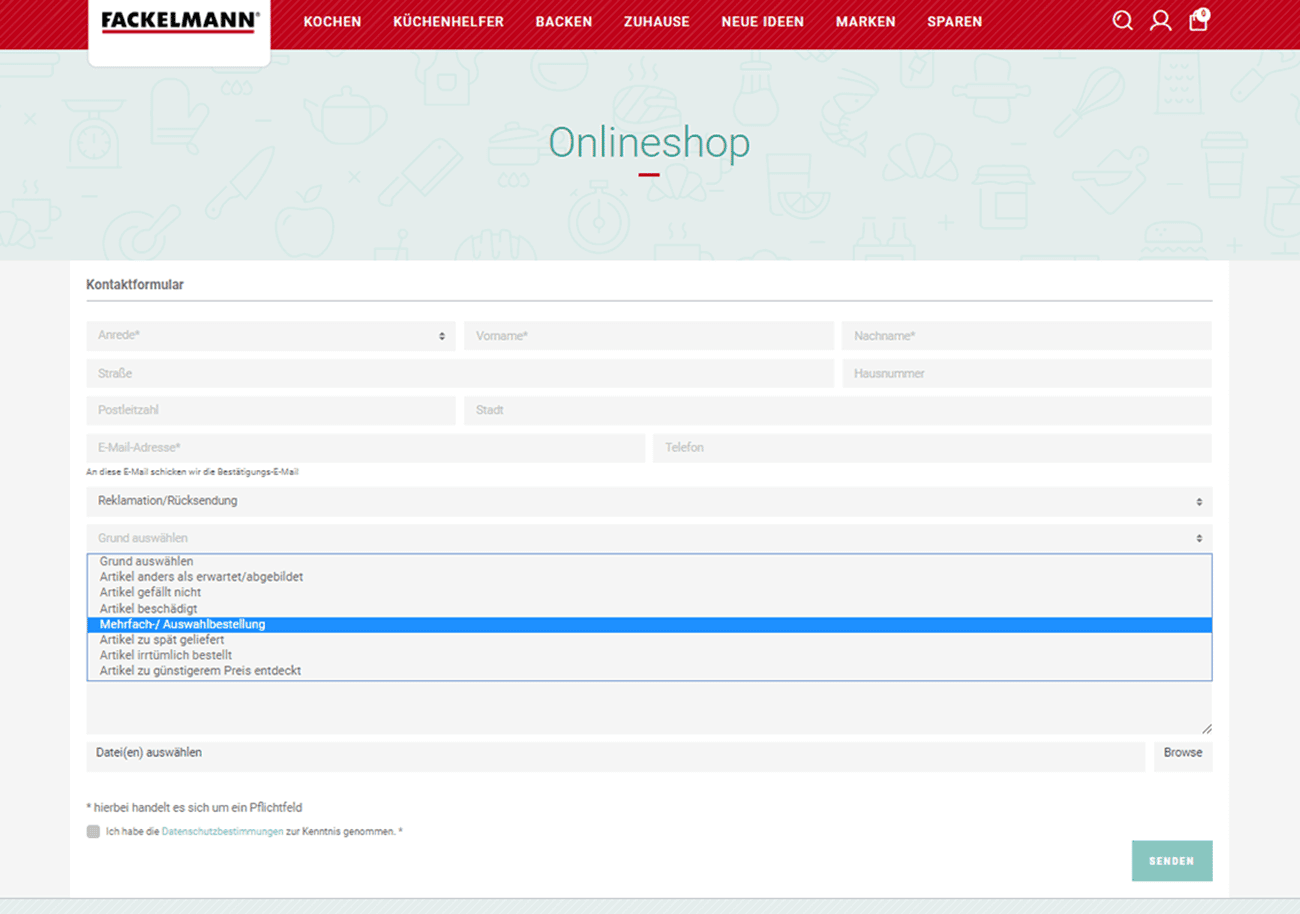
The image shows a contact form for returns in the Fackelmann online shop. Here, customers can select all the information required for the return in order to initiate the returns process.

Contact form for returns in the Fackelmann online shop (source: screenshot from fackelmann.de)

Mobile return slips

As the use of mobile services becomes increasingly widespread, mobile return slips are also conceivable. These make returns even easier and more convenient for customers. Online retailers also benefit from this, as they can plan their return processes better. By registering returns, refunds can be initiated at an early stage, which in turn leads to more satisfied customers.

Return instructions and information on how to proceed with returns provide your buyers with additional support during the returns process and ensure a smooth process and a positive customer experience.


Stay up to date on personalization: Sign up for the epoq newsletter. Register now!


Offer flexibility

By letting your customers choose the shipping service provider, you create flexibility and enhance the customer experience. When buyers have the choice of which parcel service they want to use to return the package, this adds value, which in turn can lead to increased customer satisfaction.

Investigate the reasons for the return

The reasons for returns provide information about the quality and characteristics of the products, but also about delivery satisfaction and delivery times. By recording the reasons for returns, you can obtain valuable information that you can use to optimize product quality or delivery. In addition to recording the reasons on the return slip or in your online shop's review portal, it can also be helpful to monitor social media, for example.

You can also send your customers an email asking them specifically why they returned the item. You can encourage them to shop at your online store again by offering them a replacement item in a different size or a discount.

In general, constant monitoring of all processes is important to ensure an optimized returns process and effectively reduce returns.

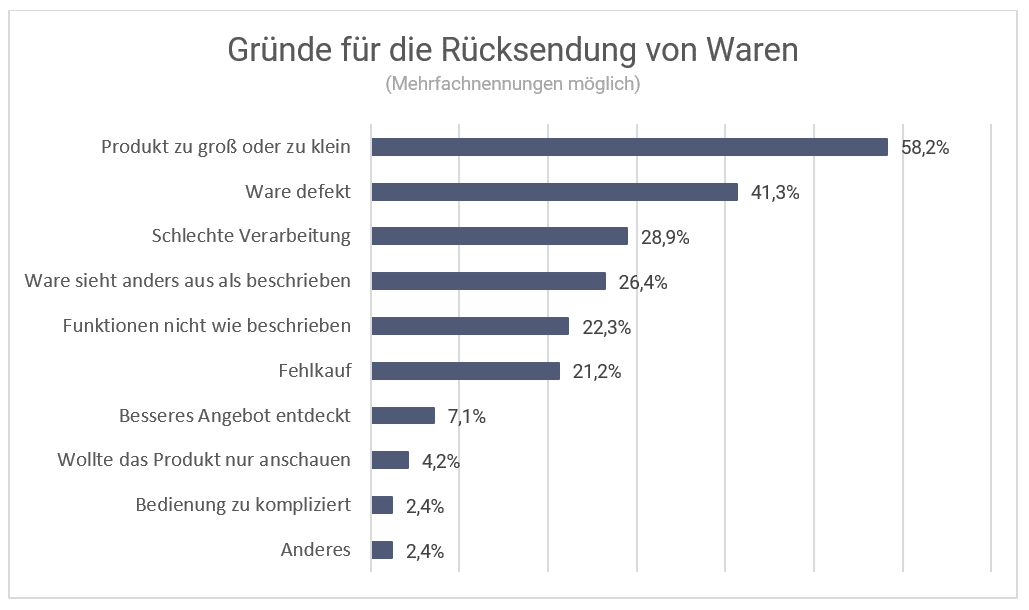
The following statistics show the reasons responsible for returns.

The graph shows statistics on the reasons why goods are returned.

Statistics on the reasons for returning goods (source: Statista¹)

Enable transparent tracking

As mentioned at the beginning, the ability to track shipments is very important to many online shoppers. However, you should not only consider this when placing an order. Inform your customers in the same way when it comes to returning their items. Confirmations such as "Goods received" or "Refund initiated" inform buyers about the current status of their return. This builds trust and creates a positive customer experience.

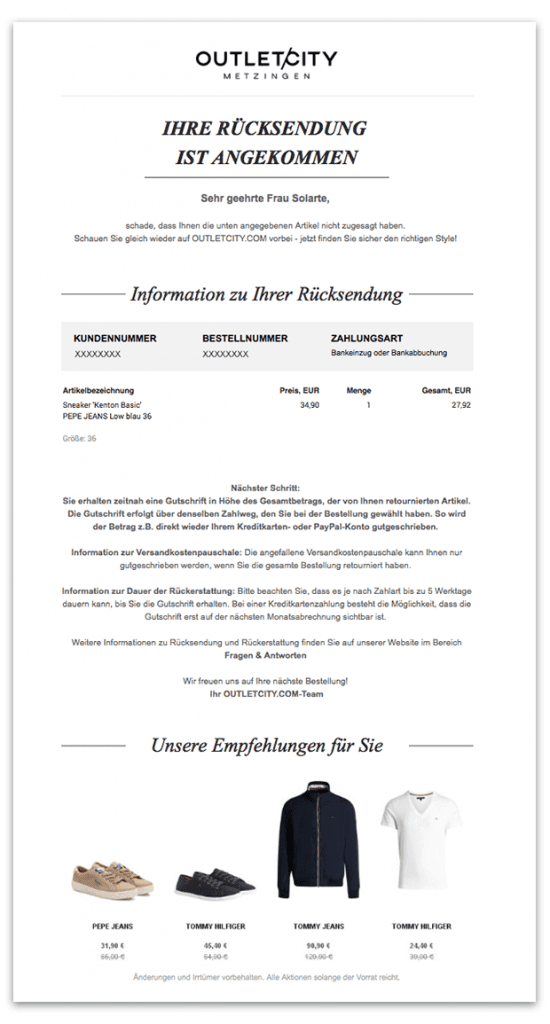
OUTLETCITY METZINGEN informs its customers via email about the progress of their returns, keeping them up to date on the status of their return shipment. For example, customers receive confirmation as soon as their return shipment has arrived.

Email confirmation from OUTLETCITY METZINGEN that the returned goods have been received (source: screenshot of email from outletcity.com)

Offer contact options

If buyers still have questions about their return, they should be able to find contact options quickly and easily. As with product advice, customers should also be offered a simple way to clarify any open questions regarding their return via the customer hotline or live chat support. In addition, you can also use social media as a channel for contacting customers.

Provide a returns portal

You can combine many of the measures mentioned above for optimizing the returns process via your own returns portal. In a returns portal, you can provide contact details, the returns label, and other information about returning goods, as well as offering the option of tracking returns.

Furthermore, a returns portal can provide detailed returns overviews for individual orders, for example. This allows buyers to easily select individual products from their order and initiate the return shipment for the desired goods.

Conclusion: An optimized returns process and high customer satisfaction are not mutually exclusive.

Returns are part of everyday business in e-commerce. To ensure that the returns process runs smoothly, it is important to optimize it. Various measures, such as clearly communicating the conditions, providing a returns portal, or offering package status tracking, can ensure a smooth process. By focusing on the customer experience not only during the ordering and shipping process, but also when returning goods, you can turn the shopping experience into a positive one despite the return. This will encourage customers to return to your store for their next purchase.

Source:¹Statista

Want to know how you can reduce your return rate?

Schedule a web demo on this topic!

Sarah, Junior Content Marketing Manager at epoq
Sarah Birk
Online Marketing Manager - Content & SEO
Sarah works as Online Marketing Manager – Content & SEO at Epoq and is responsible for the content area. Her responsibilities range from content planning and conception to analysis and optimization of various content formats, taking important SEO aspects into account.