
44.3% increase in sales thanks to AI-generated category newsletters at Outletcity Metzingen
Outletcity Metzingen increased sales via its newsletter by 44% thanks to AI-based selection of the right category at the right time.

Once a customer has made a purchase in the online shop, the primary goal has been achieved. Does this mean that shop operators can sit back and relax from this point on? The clear answer is no! Because the customer relationship does not end with a business transaction, but really only gets going from this point on. So if you forego after-sales measures and thus the opportunity to satisfy the customer even after the purchase, you are wasting the enormous potential that lies behind the customer you have already won. In this article, we reveal the options available to you and how you can use them to retain customers in your shop in the long term.

Here's what you can expect to find in this blog article:
Integrating after-sales into business processes
After-sales and after-sales management – what exactly are they?
After-sales management as part of customer relationship management
After Sales as part of the customer journey
After-sales measures
Traditional after-sales measures
Needs-based after-sales measures
Tips for your after-sales measures
Conclusion: Build trust and gain loyal customers through support, service, and appreciation.
There are numerous reasons to address the topic of after-sales. After-sales processes open up additional economic and strategic advantages by leaving a lasting impression on your customers and winning them over as repeat customers who will gladly shop with you again. If, on the other hand, you neglect your buyers or fail to show them sufficient appreciation, they may decide to buy from another supplier next time. So don't miss out on the opportunity to gain loyal customers and take after-sales measures to generate additional sales.
To begin with, in order to gain an overview of the topic of after-sales, we would first like to clarify a few terms and classify after-sales within business processes.
If you translate "after sales" into German, the meaning becomes immediately clear: after the sale. After sales is therefore the phase in which a customer has already made a purchase or placed an order and is now experiencing the product or service.
After-sales management encompasses all measures that companies take after selling a product. HubSpot aptly describes this as a kind of "sales aftercare." In the past, the term "after sales" was mainly understood to mean customer service. But there is much more to it than that. Digitalization in particular has opened up many new opportunities in this area. Overall, it is about supporting customers after their purchase and building a connection with them. In addition, another need is becoming increasingly important, especially in today's digital age: customers want to be entertained beyond the purchase. They like to browse through their own product and brand world and always want to discover new things.
Customer relationship management, or CRM for short, encompasses the entire spectrum of customer relationship management. It therefore includes all measures for shaping and maintaining all relationships and interactions with your customers. These include, for example
The customer and their needs are at the center of all processes. All company activities are consistently geared towards this. After sales therefore describes the part of CRM that takes place after a sale has been made. After-sales measures are therefore aimed at those customers who have just purchased a product.
Stay up to date on personalization: Sign up for the Epoq newsletter. Register now!
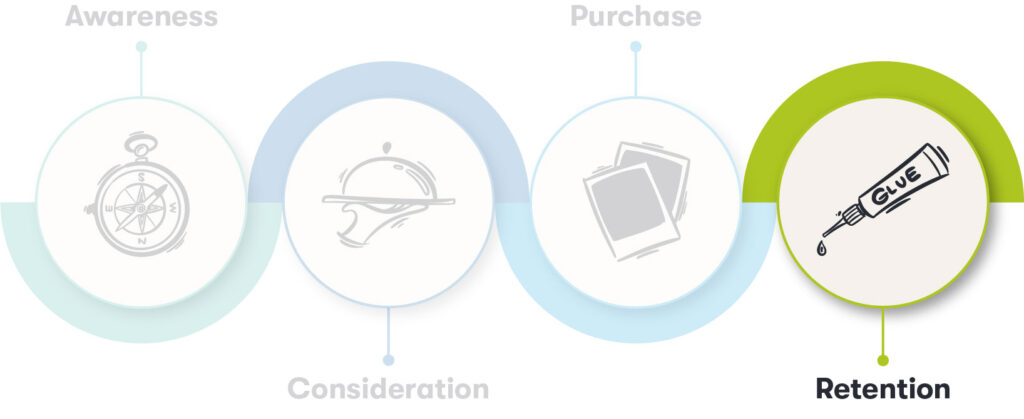
The phase of the customer journey that follows the completion of a purchase is specifically known as the retention phase. This phase therefore falls under the category of after-sales service.
The retention phase is all about leveraging and building on your customers' trust and fostering a connection by staying in touch with them and keeping them informed about new offers and other updates.
This means that the customer relationship does not end with the purchase. Even after a purchase, there can be numerous points of contact between the buyer and the store. For example, a customer may not be satisfied with the delivery or the goods themselves, resulting in complaints or returns.
As a shop operator, you should handle these and all other possible customer contacts with the company professionally and act to the customer's satisfaction. The performance and handling of inquiries of this kind, as well as the purchasing process, are crucial for a successful customer relationship. After-sales measures are a suitable way to implement this.
These aim to retain customers in the long term for the company or online shop, the products, the service, or the brand, and to achieve repeat purchases with the help of good service. It is therefore very important to get to know customers, respond to their needs, and provide them with suitable content even after the purchase.
As a shop operator, you have many different ways to accompany your customers beyond the purchase, to be present, and to retain them to your company through various measures. Among other things, you can:
Need-based after-sales measures help you address customers’ specific needs based on their current situation and offer them relevant added value.
To target customers even more effectively, you can tailor your after-sales efforts to the needs of your online store customers at each stage of the customer journey. As previously explained, the retention phase falls under after-sales. During this phase, the need for connection is addressed. We’ll show you how to specifically address this need to retain your customers, increase the click-through rate, and boost traffic to your online store.
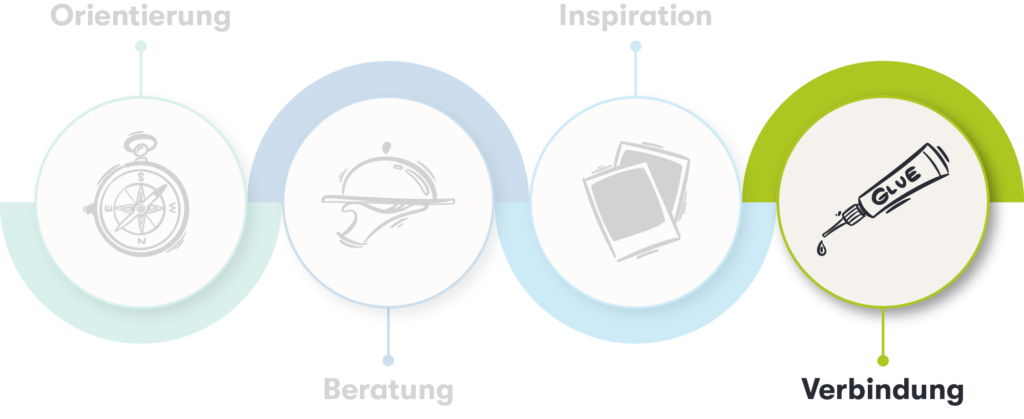
Email campaigns and newsletters are a well-known tool for maintaining contact even after a purchase. If customers are satisfied with your products and services, they will be happy to connect with you. By keeping in touch, you can build customer trust and bring your customers back to your online store. It is important to personalize your emails and tailor the content to the interests and needs of your customers.
You can use transactions as occasions for your emails. Other suitable occasions include your customer's birthday or seasonal events and holidays such as Easter, the start of the swimming season, etc. Here, you can also offer small gifts in the form of discounts or voucher codes to encourage your buyers to visit your shop again.
Depending on the occasion, newsletters on specific topics are also suitable. In the form of content and thematically appropriate and relevant product recommendations, you can offer your customers added value. You can find more information on this in our blog article Content Commerce: Creating online shopping experiences through content.
In addition, you can use your emails to introduce new products or services to your recipients and recommend similar or complementary items. By leveraging your customers’ past behavior, you can tailor the product recommendations in your emails to their specific needs. As a result, these personalized emails with customized product recommendations are particularly relevant to your customers.
For example, you can refer to a customer’s most recent purchase and recommend items that match or complement the product they bought last, or—as in the example from hagebaumarkt—feature product recommendations tailored to each customer’s preferences in a themed newsletter.
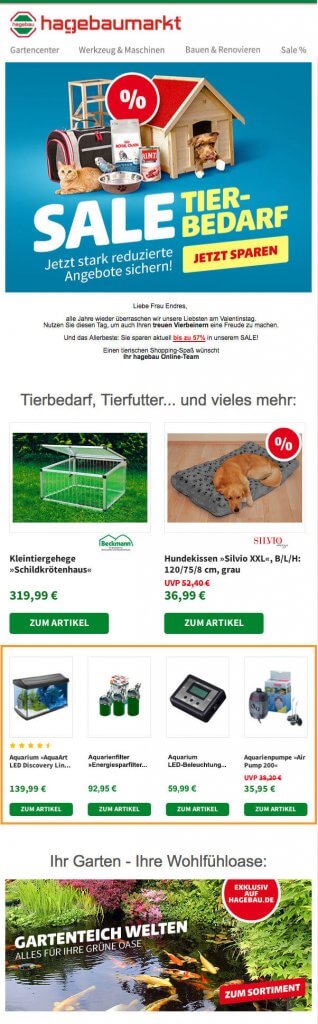
Newsletter on pet supplies with personalized product recommendations tailored to the preferences of the recipient from hagebaumarkt
You can also provide information about upcoming events and share news. Opinion polls are also suitable as an after-sales measure. Messages such as "Your feedback is important to us" show your online shoppers that you value them. At the same time, such surveys provide you with valuable information and feedback about your products and services. You can then use this to optimize your processes, etc.
Personalized emails with relevant product recommendations allow you to build trust with your buyers and increase traffic to your online store.
Stay up to date on personalization: Sign up for the Epoq newsletter. Register now!
Now you have lots of ideas about what after-sales measures you can take to build strong relationships with your customers and continuously nurture them. Finally, we would like to give you a few tips to help make your after-sales measures a success.
These days, good prices alone aren’t enough in most cases. Customers value good service and a sense of being appreciated. To build customer loyalty and turn them into long-term regulars, after-sales initiatives give you the chance to leave a lasting positive impression on your buyers even after the purchase. Initiatives tailored to specific needs are particularly effective for targeting customers and addressing their individual requirements. Through personalized emails with tailored product recommendations, you build customer trust and bring your buyers back to your store. If you also follow our tips on these measures, they are guaranteed to be a success. The result: satisfaction for your customers and, for you as a store owner, increased traffic from loyal customers who trust you.
"After-sales" refers to all activities that take place after a purchase is completed. The goal is to continue supporting customers, build trust, provide service, and foster long-term loyalty to the online store.
After making a purchase, customers have experiences with delivery, the product, customer service, returns, and other forms of communication. These experiences influence whether they will buy again and whether they will trust the store in the long term.
Traditional measures include customer clubs, loyalty programs, package inserts, training sessions, events, exclusive customer areas, informational materials, discounts, and special post-purchase services.
Personalized emails help maintain contact with customers and can include relevant content, tailored product recommendations, coupons, or requests for feedback. This increases the likelihood of bringing customers back to the store.
They show appreciation, provide service, and create recurring touchpoints. When customers feel well taken care of, they are more likely to make repeat purchases and remain loyal to the store.
Personalized newsletters, product recommendations based on recent purchases, feedback emails, birthday emails, service announcements, and exclusive offers for existing customers are particularly effective.
The frequency of contact should be targeted and context-specific. Too many emails can be disruptive, while relevant messages sent at the right times foster trust and encourage repeat visits.
Find out how Outletcity Metzingen achieved a 44.3% increase in sales through AI-generated category newsletters.
Read the case study now!

You are currently viewing placeholder content from HubSpot Embedded Content. To access the actual content, click the button below. Please note that doing so will result in data being shared with third-party providers.
More InformationYou are currently viewing placeholder content from HubSpot. To access the actual content, click the button below. Please note that doing so will result in data being shared with third-party providers.
More InformationYou are currently viewing placeholder content from HubSpot Meetings. To access the actual content, click the button below. Please note that doing so will result in data being shared with third-party providers.
More Information