Back to overview
  • Reduce Return Rate

How you can reduce returns with the help of a returns portal

  • Published December 8, 2021
  • Vincent Ager
  • Reading time: 7 min.

Returns are often a tiresome issue—both for shop operators and customers, and ultimately for the environment. However, if you make the right adjustments, you can use returns to your advantage and reduce the return rate in a targeted manner. In this guest post, Vinzenz from our partner Sendcloud reveals how everyone can win in the end, despite what appears to be a hopeless lose-lose-lose situation.

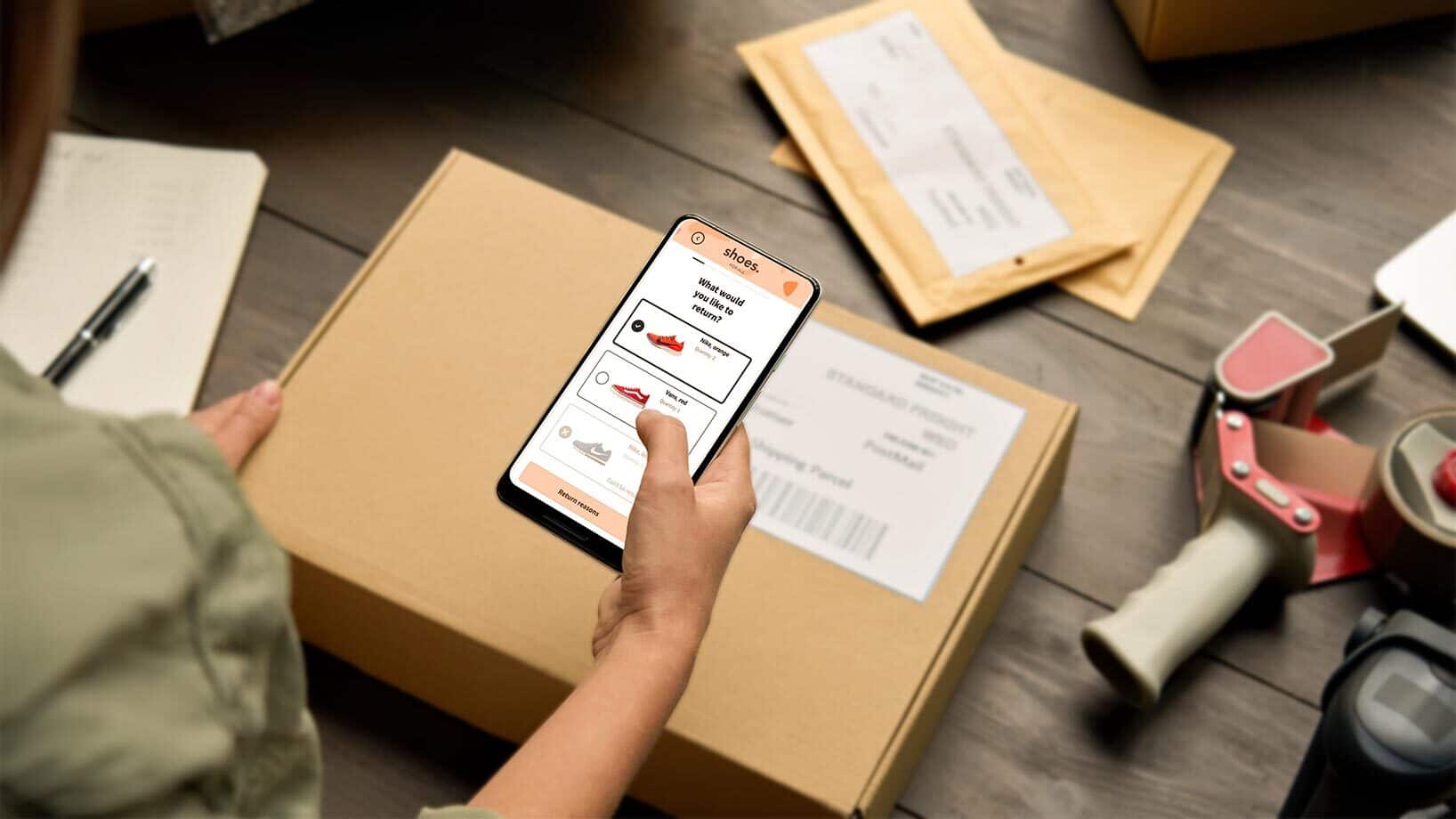
The image shows a customer returning their order via the returns portal.

Returns. A problem that concerns every shop operator. Because returns cost money, time, and customer goodwill. Alien Mulyk, returns expert at the German E-Commerce and Distance Selling Trade Association, knows what she's talking about: "Every return costs retailers an average of ten euros."¹ Smaller companies suffer particularly from returns, as they cannot fall back on scalable processes like the big players.

The consumer study "E-Commerce Delivery Compass 2021/2022" conducted by the shipping platform Sendcloud concluded that more than 84% of consumers return their orders at least occasionally or regularly if they are not satisfied with the goods.
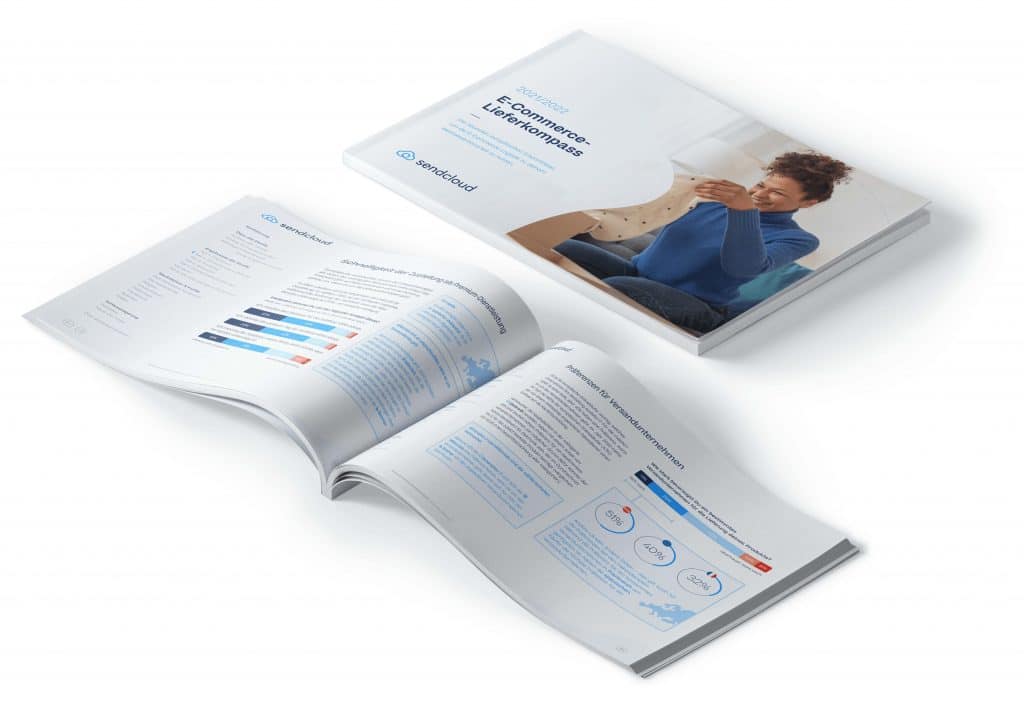
The graphic shows Sendcloud's E-Commerce Delivery Compass 2021/2022. It contains the latest insights into current consumer behavior in e-commerce.

Sendcloud's E-Commerce Delivery Compass 2021/2022 contains the latest insights
into current consumer behavior in e-commerce (source: Sendcloud).

This also has consequences for the environment: the additional transport causes increased CO₂ emissions. In Germany alone, 315 million parcels were returned in 2020.³ And then there's the customer. Ultimately, this process is anything but a pleasant customer experience, and it annoys them just as much as it annoys you as a retailer. It's a lose-lose-lose situation, so to speak, with no one coming out on top. So what can you do as a retailer?

Turn returns to your advantage

How can returns still be useful?

First and foremost, it is important to make the returns process as smooth as possible for your customers. On the one hand, this has an extremely positive effect on the customer experience. And the shopping experience is important. In fact, 95% of all customers with a positive returns experience return to the same store because of it.⁴ On the other hand, this also increases your conversion rate.

Reduce return rates with a returns portal

To process returns as effectively, easily, and quickly as possible, you need a professional solution in the form of a returns portal. This allows you, as an online retailer, to optimize and automate your returns processes. This means you save valuable time while making the returns process as pleasant as possible for your customers. And you'll get closer to your goal of reducing returns. The returns portal collects exactly the data you need to reduce returns. And this part is really exciting for you as an online retailer.


Stay up to date on personalization: Sign up for the epoq newsletter. Register now!


In the returns portal, customers can specify the reason for returning each item. Was it the wrong item? Did the product image online not match the actual product? Or was the item perhaps damaged or defective? These are the three main reasons for returns. As an online retailer, you can now view all this information clearly in your returns portal. Below, we explain how you can use this data to reduce the number of returns in the future.

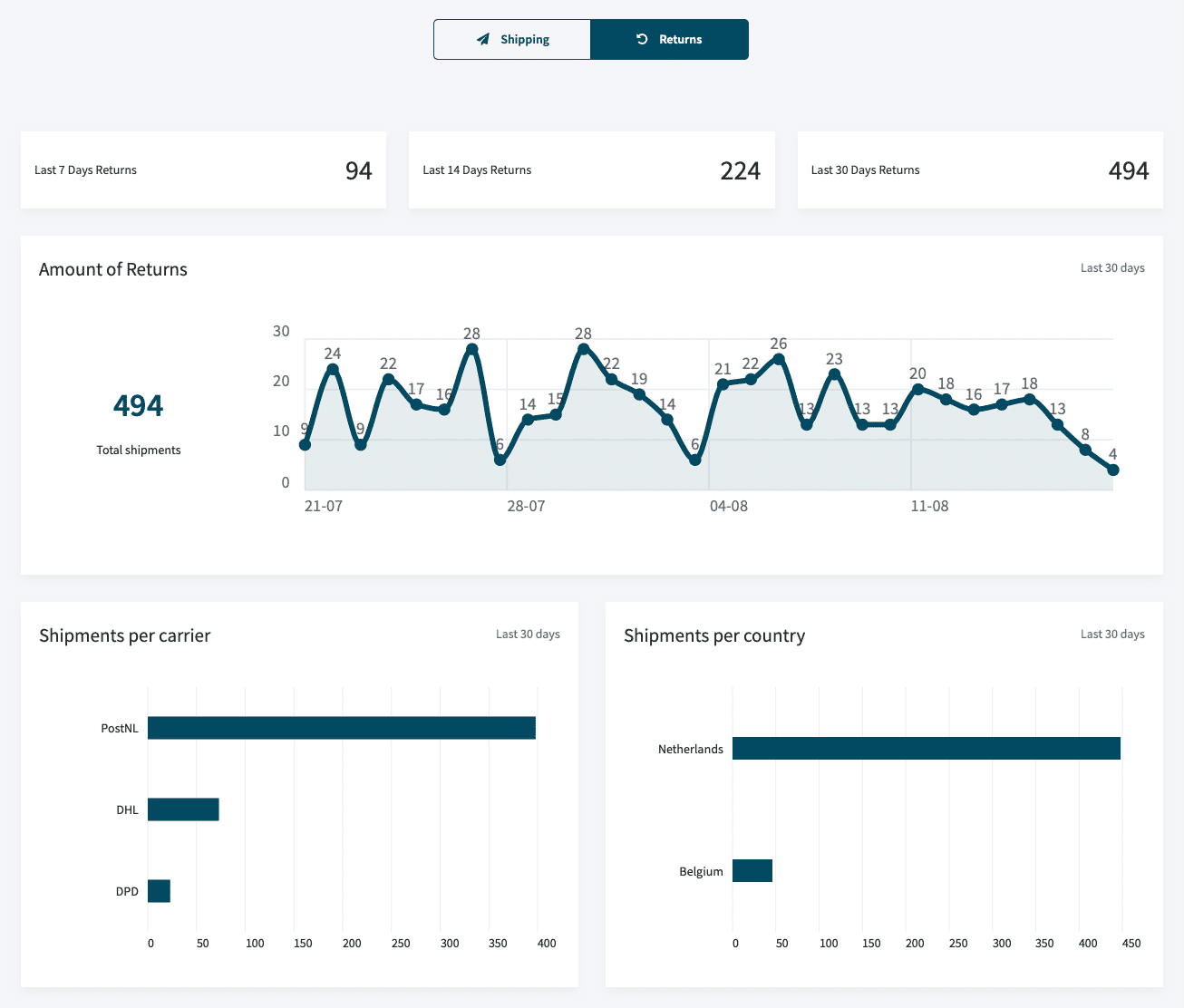
The image shows an analytics dashboard. This provides retailers with comprehensive data on their returns.

A clear analytics dashboard provides retailers with comprehensive data on their returns (source: Sendcloud).

Accurate and helpful product descriptions and photos

A certain pair of jeans is frequently returned. Feedback from customers on the returns portal tells you that the jeans are smaller than expected. So, all you need to do is place this information directly on the product page to inform future customers. Either with a note that the jeans are smaller than expected, or better still, with exact measurements. This increases the chances that customers will be able to order the right size without any problems and that the jeans will not be returned again. The same applies to product photos, which can sometimes be misleading about the exact dimensions or color of a product.

Better online offering

Customer feedback also tells you whether the items and products meet customer expectations. For example, in terms of the quality that your online store promises. Use the feedback and pass it on to suppliers and manufacturers—they are usually happy to receive suggestions on how they can improve their products. If in doubt, remove the item from your range or switch to another supplier. This allows you to effectively separate the wheat from the chaff in your product range, which in turn leads to fewer returns.

At the same time, you also improve your overall offering, including your reputation as an online store.

Custom design

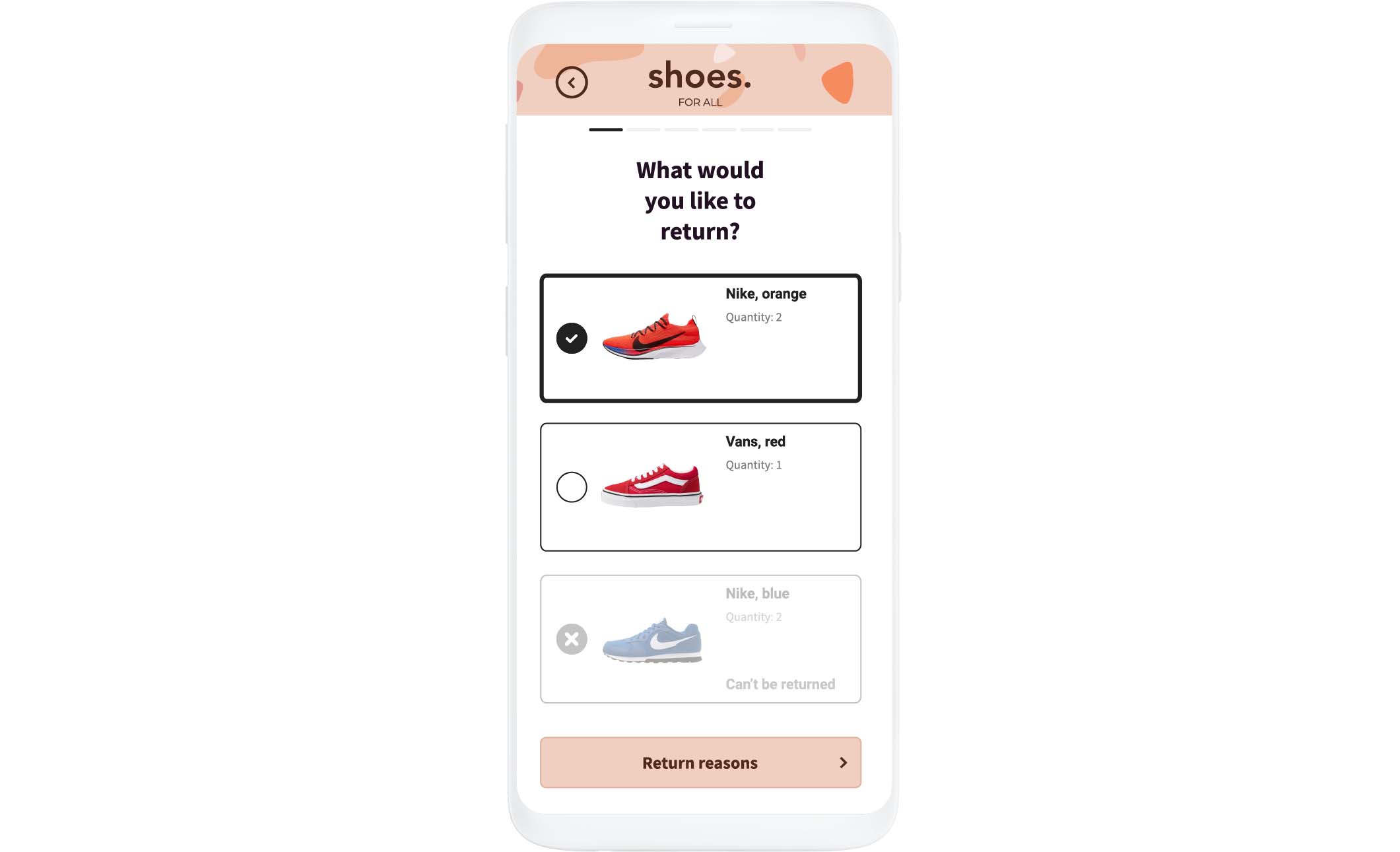
Good returns portals offer you the option of customization. This means you can design them to match your shop or brand. Customers appreciate a consistent experience when purchasing and returning items, and are often impressed by the professionalism displayed by your online shop. Even your return labels bear the individual signature of your brand.

The image shows an example of a personalized returns portal. Personalized returns portals not only look good, but also help to increase conversion rates.

Personalized return portals not only look good, but also help
achieve a higher conversion rate (source: Sendcloud).

Return policy – it's simple

Creating return policies can be quite tedious. In addition, they must be presented in a way that is simple and easy for customers to understand. Return portals allow you to create your return policies quickly, easily, and comprehensively with just a few details from you and a few clicks. And that can be worthwhile for you!

Current consumer studies show that for more than 85% of online shoppers, return policies play a decisive role in their purchasing decisions.⁵ In addition, the length of the return period offered by a store is not insignificant for customers.


Stay up to date on personalization: Sign up for the epoq newsletter. Register now!


Reliable shipping service providers

As we described at the beginning, shipping services handled 315 million parcels in 2020 alone. And the pressure is high. It is inevitable that parcels and goods will be damaged in the process. In the returns overview, online retailers can clearly see when this is accumulating with a particular service provider, for example. Is the problem widespread? Does the problem occur more frequently in a particular region? Or is it perhaps dependent on the size of the parcel? With the information from the returns portal, you can contact the service providers—or, if necessary, switch to another provider.

This is where return portals offer the advantage of a "multi-carrier strategy." This means you can offer customers different delivery services they can use to return their goods. Customers appreciate this flexibility, because all too often, only one or two service providers are located near their home. And this is often a deal-breaker for customers when ordering goods. Ergo, here too, there is the potential to achieve more conversions through the service you can offer as a shop.

Return portals can be integrated into most shop systems and connected to the most important shipping service providers. The graphic shows some examples of such connections.

Return portals can be integrated into most shop systems and connected to the most important shipping service providers (source: Sendcloud)

Conclusion: The returns portal makes everyone a winner

Returns are inevitable. And rightly so. After all, as a customer, you want to be able to return goods. So make the most of your returns with the help of a returns portal. As you know, informed feedback is a gift! Not only does it make your customers happy, it also allows you to improve your offering, reduce returns, and help the environment. That's right: a win-win-win for everyone!

Sources: ¹ ntv, ² Sendcloud Delivery Compass (2021/2022), ³ NDR, ⁴ Sendcloud, ⁵ Sendcloud Delivery Compass (2021/2022)

Would you like to learn how to reduce the return rate in your online store?

Schedule a web demo on this topic!

Vincent Ager
Digital Content Specialist DACH at Sendcloud | Epoq Guest Author
As Digital Content Specialist at Sendcloud, Vinzenz Ager is responsible for content marketing in the DACH region. As an avid online shopper, he knows firsthand what matters in online retail. He uses his knowledge to help online retailers tailor their shipping to customer requirements in order to increase conversion rates in the long term.