
E-book – The Comprehensive recommendation system Guide
Learn more about recommendation strategies, areas of application, personalization, and success factors for product recommendations, as well as successful use cases in this guide.


Did you know that...
of online customers are more likely to return to a store if it offers relevant product recommendations - a clear indication of the impact recommendations have on customer loyalty and repeat purchases. (Source: Contentful 2025)
of Amazon's revenue is generated through product recommendations - clear evidence of the effectiveness of recommendation engines (McKinsey via ameo-agentur.de, 2024)
of retail companies see great potential for the use of AI in personalized recommendations? (Source: Bitkom Research, 2023)
ROI is achieved by companies within 3 years when they invest in advanced personalization technologies such as recommendation engines (Forrester, 2022)
A recommendation engine is a software service that displays relevant recommendations in an online store, thereby providing inspiration during the purchase phase. To do this, the click and purchase behavior of each store visitor is recorded in an AI-powered knowledge base and compiled into a history. Using self-learning technology, the shop visitor is presented with product or content recommendations that match their interests. Various types of recommendation systems are used—ranging from behavior-based to context-based approaches. This creates purchasing impulses that increase the shopping cart value. That is exactly what Epoq Inspire offers.
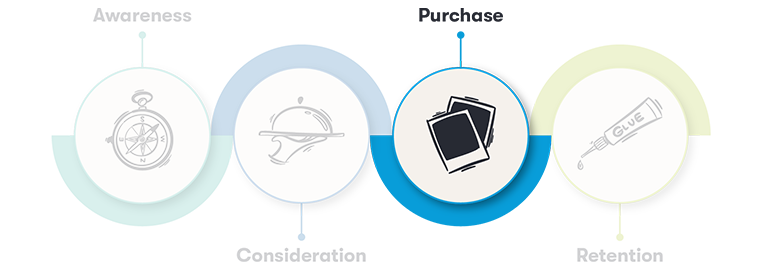
Our recommendation system generates an AI-powered knowledge base to calculate individual recommendations for each customer – tailored precisely to their behavior and preferences.
This inspires your customers in a targeted manner during the purchase decision phase and creates effective buying impulses. For example, a customer looking for "Tom Tailor" pants will be recommended other matching products from this brand. If they add pants to their shopping cart, we will show them matching T-shirts from their favorite brands.
This turns every touchpoint in the store into a personalized experience, which increases the shopping cart value and boosts the conversion rate.
You are currently viewing a placeholder content from Default. To access the actual content, click the button below. Please note that doing so will share data with third-party providers.
More Information"Our premium and luxury customers expect personalized offers and recommendations—especially from us as a closed online store—based on brand preference, their own size, taste, etc. With Epoq as our partner, we are constantly finding new approaches that we implement agilely and optimize together."
Dr. Stefan Hoffmann | Managing Director | Outletcity Metzingen

Our recommendation system is based not only on your customers' interests, but also on your specifications. With flexible merchandising options, you can set rules and priorities to tailor recommendations to your business goals. Whether you want to promote specific products, take stock levels into account, or make strategic placements, the combination of intelligent personalization and manual control makes our recommendation system a powerful tool – perfectly tailored to your product range, your goals, and your KPIs.

Determine which products, brands, or categories should be displayed preferentially and highlighted specifically.

Define which business objectives – such as inventory clearance, margin strength, or new products – should be taken into account when displaying products.

Define which rules should apply to specific use cases or target groups.
With Customer Targeting, you can control exactly who sees which recommendations—whether it’s all store visitors, a specific segment, or based on a particular product. What each visitor sees is always 100% personalized.

If you want to highlight a specific brand or category for all your store visitors, our AI ensures that everyone receives personalized recommendations.

Our AI automatically identifies customers who share similar interests and uses this information to create segments. Customers who like a particular brand will automatically see it displayed higher up in relevant recommendations.

You start with a product or brand—our AI automatically identifies the most relevant customers and delivers targeted recommendations.
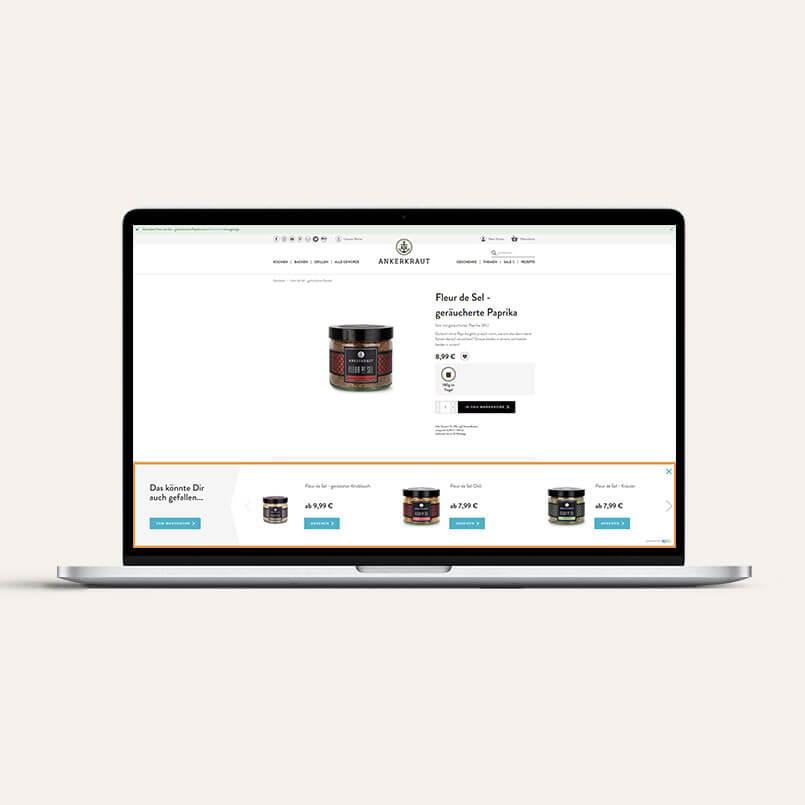 Inspire your customers with a click on the shopping cart button
Once an online shopper has decided on a product, you can inspire them with additional products when they click on the shopping cart button. The relevant recommendations are personalized and displayed in milliseconds. This increases your shopping cart value and sales. Ankerkraut was able to rapidly increase its shopping cart value by 6% as a result.
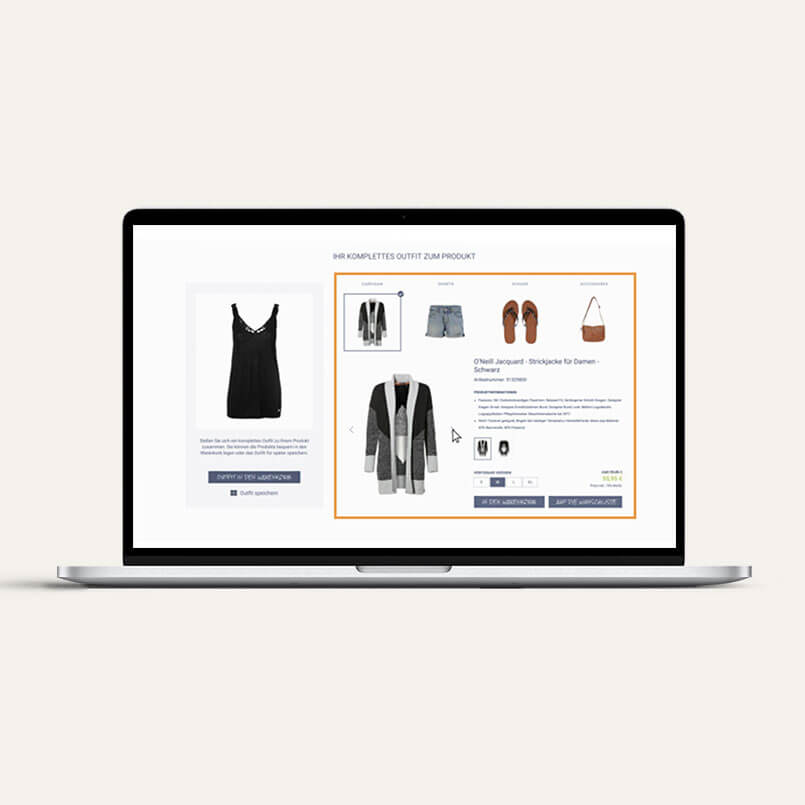 Enable your customers to purchase a complete package
Offer your online shoppers the opportunity to quickly put together complete product sets. This allows them to create a stylish outfit or compatible snowboarding equipment, for example. The set can be purchased immediately or saved for later. This gives online shoppers inspiration for compatible product sets directly on the product detail page and also saves them time. This increases shopping cart value and sales.
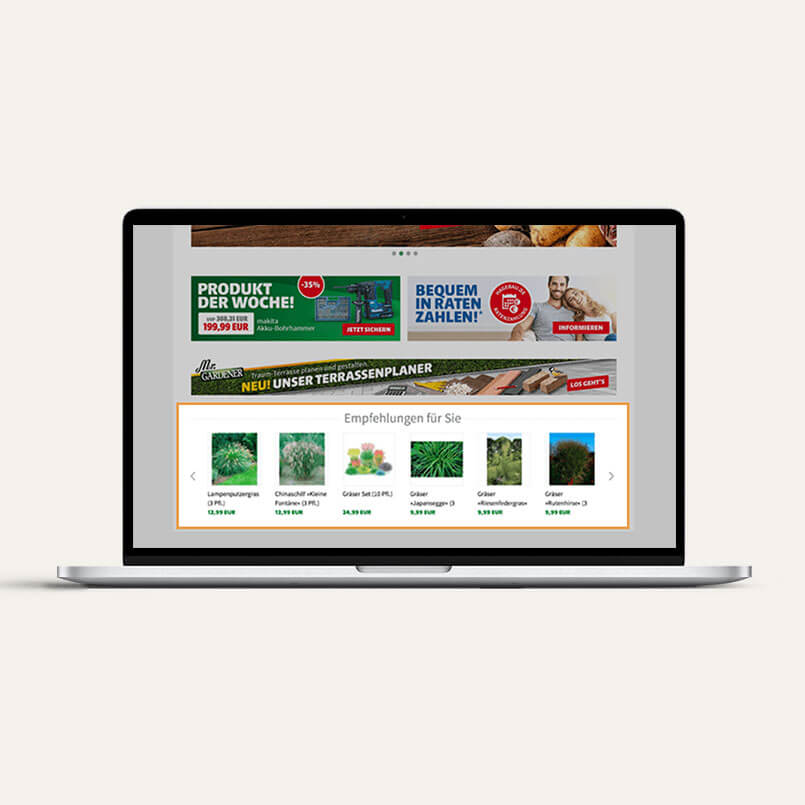 Meet the individual tastes of your shop customers right from the start
Online shoppers want to be inspired right from the start page – it is important to cater to the individual tastes of visitors as soon as they enter the online shop in order to inspire them. Visitors are not always known – in this case, top sellers or auto-generated recommendations based on the behavior of all visitors as a whole can help.
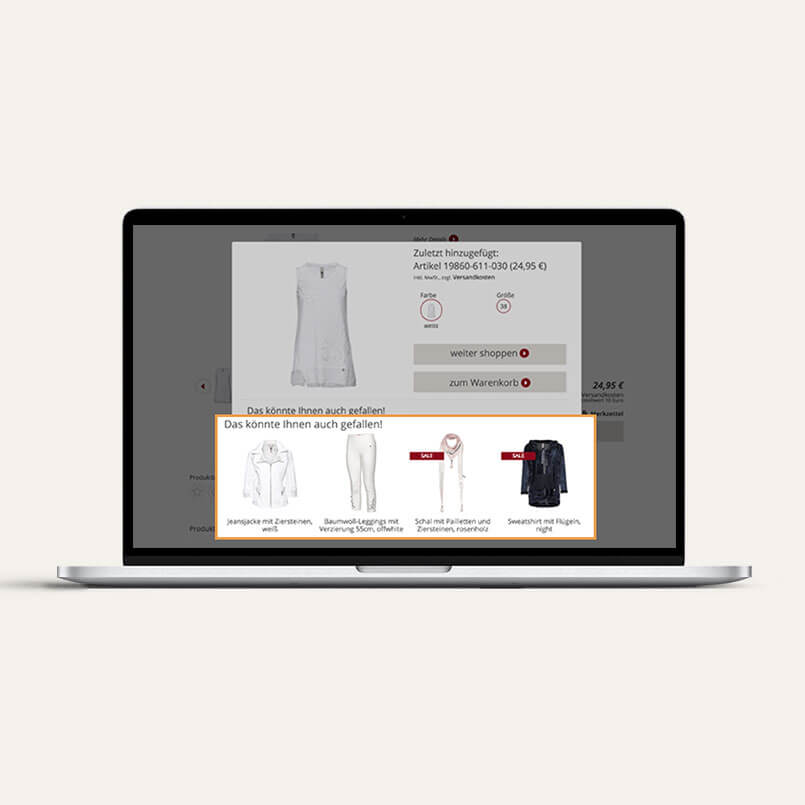 Let your shop customers make spontaneous purchases
What works in brick-and-mortar retail can also be used online. The checkout area and spontaneous access to additional items can be represented via relevant recommendations in the shopping cart. This fills the shopping cart and increases sales.
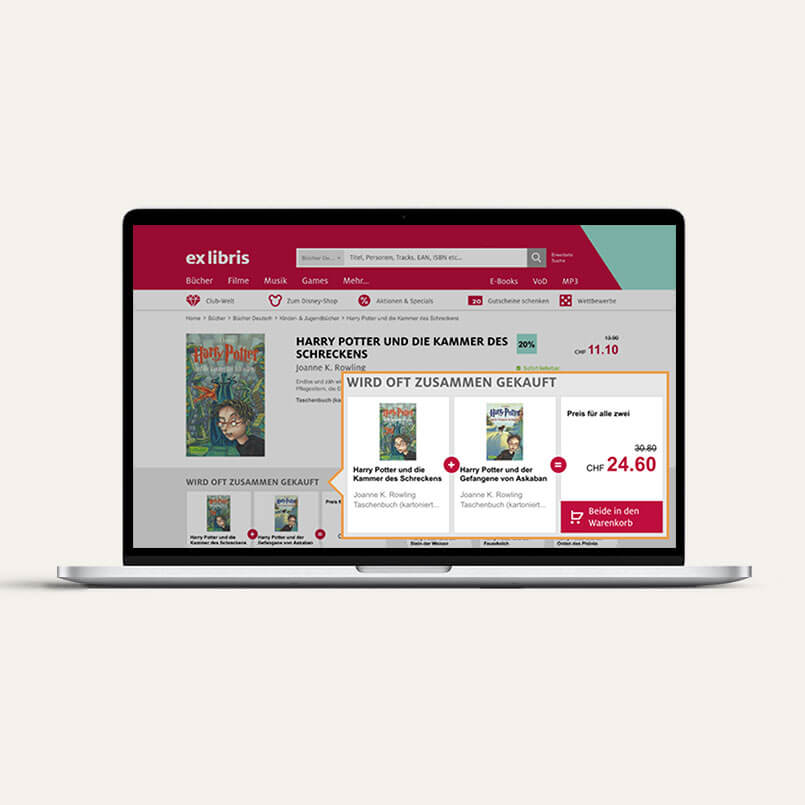 Offer your customers related products
"Often bought together" – connect what belongs together. Identify thematically matching products in the range and actively offer them. This creates needs and inspires visitors. For example, a Harry Potter fan doesn't just buy one book, but also a second one or a Blu-ray, etc. Based on visitor behavior and customer history, targeted recommendations can be displayed on the product detail page.
Before the recommendation system is deployed, our AI engine first creates a comprehensive knowledge base for your online store. It uses your product catalog, your customers' click and purchase behavior, and our and your expert knowledge. This data is intelligently linked to calculate relevant product recommendations and deliver them in a targeted manner.
Since the recommendation system is part of our modular personalization platform, you can use the knowledge base it generates for other touchpoints in your store, allowing you to comprehensively personalize the customer journey. This makes it possible to flexibly expand and continuously improve the recommendation system.
Want to learn more about the technology behind the AI engine? Then visit our E-commerce Technology page.
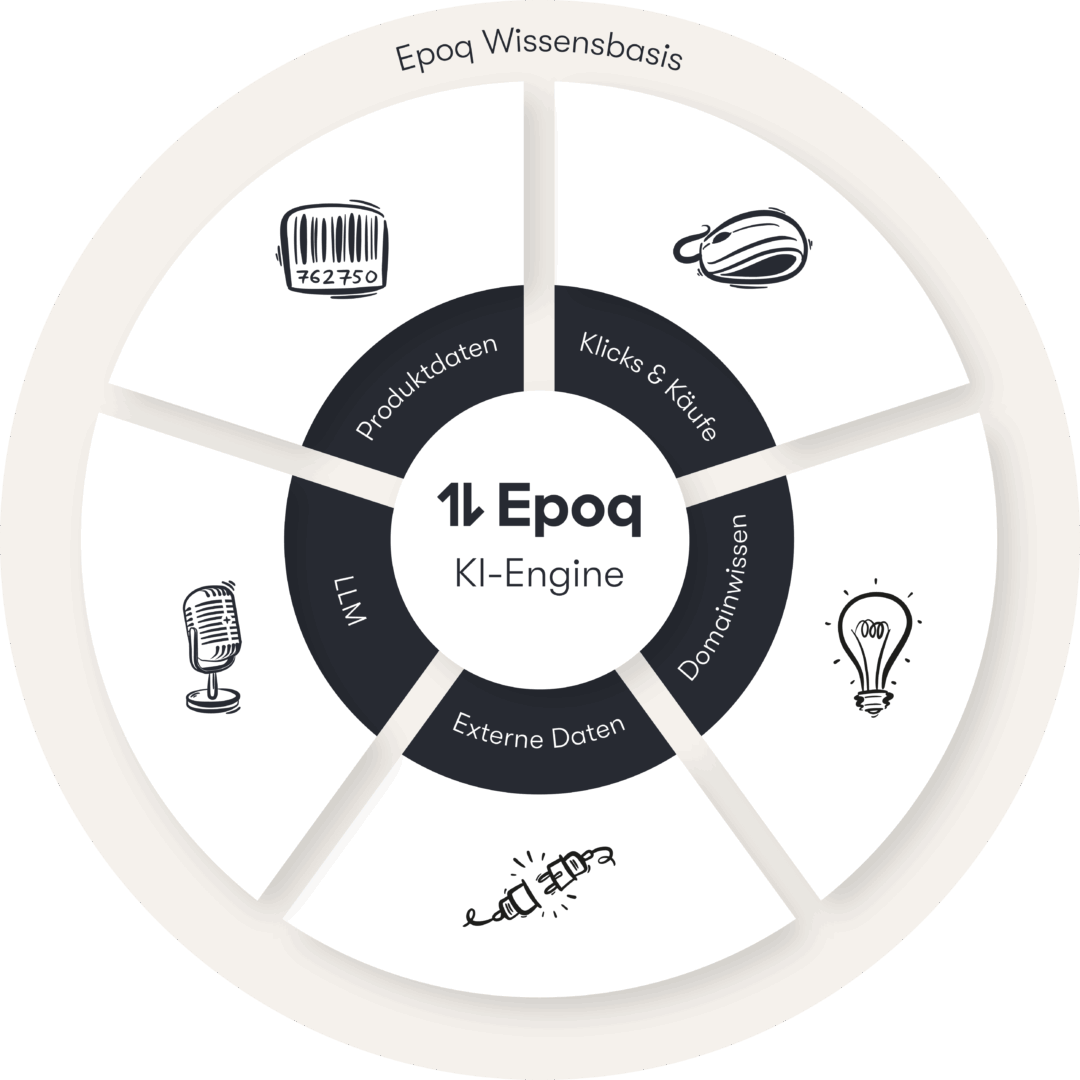

Depending on which phase of the customer journey a customer is in and which shop page they are on, different data models can be used. A hybrid model would be suitable on the product detail page, e.g., these pants are purchased with this T-shirt. Here, the click and purchase behavior of customers as well as human insights play a role.

Hypotheses about customer purchasing behavior are formulated and tested using appropriate test procedures, such as A/B testing. The findings are incorporated into the recommendations.

With use case-oriented and highly customized rules, recommendations from the system are narrowed down according to the needs and industry knowledge of the shop operators.
To generate the knowledge base, we need your product catalog in XML or CSV format and the click and purchase behavior of your shop customers. The latter is recorded via a tracking code in your online shop.
We discuss your visual ideas together and send you the div element as a placeholder for the front end of the relevant recommendations. You integrate this into your test system. Now the search algorithm is fine-tuned and the necessary configuration is carried out.
After setup in the test system and successful functional testing, the recommendation system is activated in your live system and is available to your shop customers for displaying relevant recommendations. If necessary, we will perform fine-tuning during live operation.
We will introduce you to our backend, the Control Desk, and train you on the various analysis and configuration options as well as feature usage. This will enable you to monitor and control the recommendation system.
Your shop customers receive relevant recommendations on various shop pages, which lead to impulse purchases. This provides inspiration during the purchase decision phase and increases the shopping cart value, which has a positive effect on your conversion rate and sales.
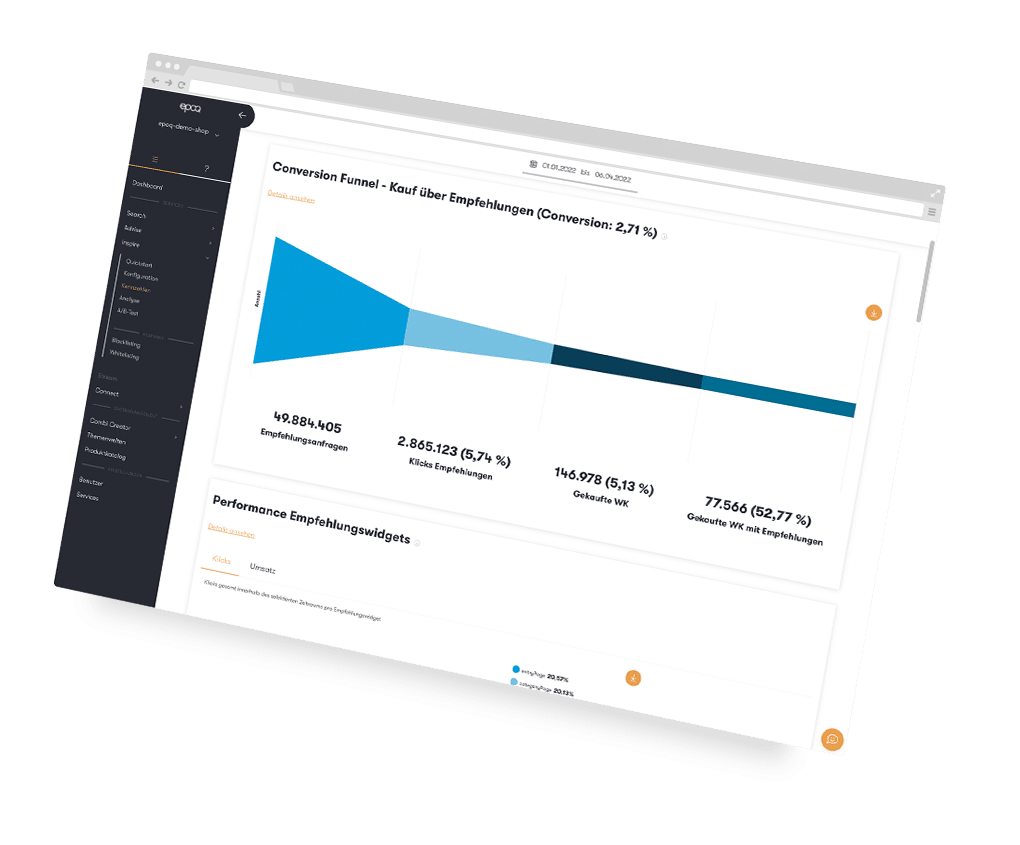
The Epoq Control Desk gives you a wide range of options for monitoring and controlling the recommendation engine.
The "Configuration" tab shows you immediately how many recommendation widgets are integrated into your online shop and where they are placed. You can also see the various rules that are used as a basis. Clicking on the "Edit" button takes you to the Rule Editor, where you can create, edit, prioritize, or delete rules.
The "Key Figures" tab provides you with information about various KPIs for your recommendations, such as click performance, revenue rate, and conversion funnel.
Using the "Analysis" tab, you can analyze your recommendation widgets with the help of key figures and display the most popular recommendations.
The "Features" section offers you various options, such as Whitelisting, Blacklisting, Combi Creator, and Theme Worlds.

You already run an online shop or similar and have all the basic features covered, and now you want to add incentives to buy on various shop pages.
You have more than 1,000 orders per month.
You have more than 1,000 products in your range.
Our recommendation system fills shopping carts along the customer journey.
A recommendation engine is software that automatically recommends relevant products to online shoppers. It operates at the right time and in the right place, analyzes click and purchase behavior, and displays personalized recommendations designed to encourage purchases.
The AI analyzes each shop visitor’s click and purchase behavior in real time and uses this data to generate relevant product recommendations—fully automatically and without any manual effort (GDPR-compliant). The more data that is collected, the more accurate the recommendations become.
A recommendation engine automatically suggests complementary products, for example, in the shopping cart or on the product detail page. This encourages customers to make additional purchases without any manual effort on their part.
Essentially two things: a product catalog and the click-through and purchasing behavior of store visitors. The latter is tracked using a simple tracking code. In addition, other systems can also be integrated, such as a PIM system or a CRM.
Typical KPIs include: click-through rate for referral widgets, cart value, conversion rate, and revenue per session. All relevant metrics are clearly displayed in the Epoq Control Desk.
A recommendation engine is worth it if you already have an active online store with at least 1,000 orders per month and more than 1,000 products in your catalog.
Pricing depends on the size of the store and specific requirements. Epoq provides customized quotes. You can request a customized quote for Epoq Inspire by clicking the “Request a Quote” button.
You are currently viewing placeholder content from HubSpot Embedded Content. To access the actual content, click the button below. Please note that doing so will result in data being shared with third-party providers.
More InformationYou are currently viewing placeholder content from HubSpot. To access the actual content, click the button below. Please note that doing so will result in data being shared with third-party providers.
More InformationYou are currently viewing placeholder content from HubSpot Meetings. To access the actual content, click the button below. Please note that doing so will result in data being shared with third-party providers.
More Information