
E-book – Personalization in E-commerce
In this e-book, you will learn why personalization is important in e-commerce and what the term personalization actually means.

The product description is one of the most important elements on your product detail pages. If you don't fill this area with high-quality content, you're missing out on important potential. In this article, you'll learn how to write the ideal product description, structure it correctly, and optimize it for search engines. We'll also discuss how you can use it to get even more out of the product data in your online store.

Here'swhatyou can expect to find in this blog article:
What is the definition of product description?
What is the purpose of the product text?
What should the ideal structure of a product description look like?
Writing product descriptions: Tips to keep in mind
Create search engine optimized descriptions
Write with your target audience in mind
Ensure good readability
Focus on the benefits
Why is the product description important for personalization?
Conclusion: Utilize product descriptions in e-commerce and reap the benefits
Frequently asked questions about product descriptions in e-commerce
A product description is a text that describes the special features, characteristics, and functions of a product. In an online shop, its purpose is to provide potential customers with all the important information about the item and encourage them to make a purchase.
When a customer shops in a brick-and-mortar store, they can touch and experience the product. If necessary, the salesperson can also advise them on their selection. In e-commerce, however, this tactile experience is not possible. That's why you should provide product descriptions that not only convey pure facts, but also paint as realistic a picture as possible of the feel and function of the product and advise buyers. The product description thus serves as a kind of substitute for touching and feeling the products in a brick-and-mortar store. If you use it skillfully and convey all the important information in an appealing way, you can also avoid returns. In addition, it is the task of the product description to arouse emotions in visitors to the online store and create a need.
Stay up to date on personalization: Sign up for the Epoq newsletter.Sign up now!
Pay attention to the following aspects so that your product description is not just a list of facts, but rather makes your customers feel that they are receiving the best possible advice. This will strengthen customer confidence in the product and in your online store.
Product descriptions are an important sales tool. At the same time, they help your online shop achieve a better ranking in search engines. To do this, you should follow the standard rules of search engine optimization (SEO):
Before you start writing, you should consider your target audience. Determine how much explanation the product requires, which emotions you should ideally appeal to, and which arguments are most likely to convince your customers of the product's benefits. Then use these points as a guide when writing the product description.
Ensure that the text is easy to read. Make it clear and varied, work with different elements, and use meaningful headings. We have listed below the elements that can be helpful in creating the ideal product description:
Keep the paragraphs short and convey the most important information right at the beginning. Not every visitor to your online shop will read the entire description.
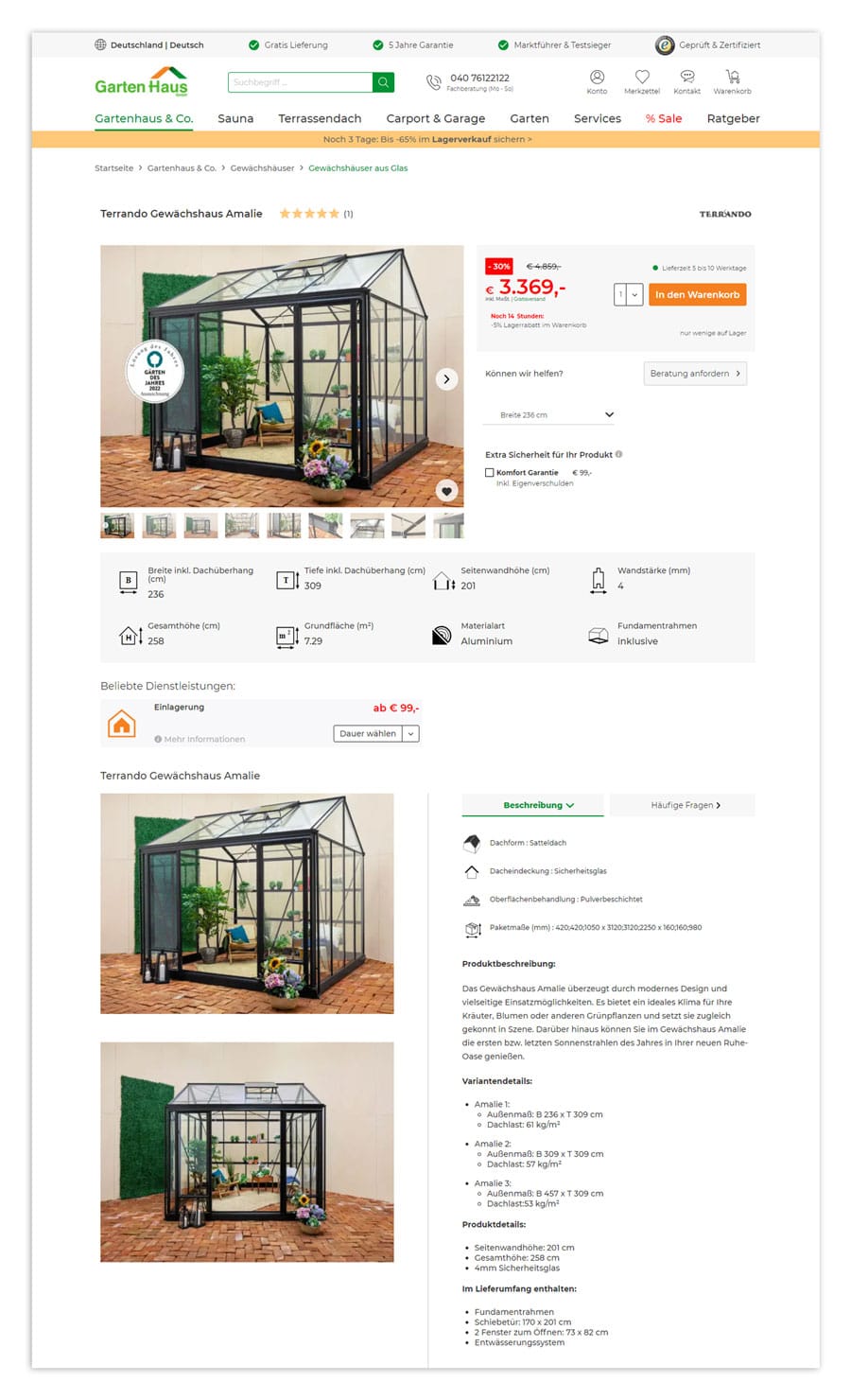
Gartenhaus uses various elements for product descriptions, such as bullet points, graphics, and FAQs. (Source: Screenshot from gartenhaus-gmbh.de)
To help your customers understand the benefits your product offers them, you should consistently focus the product description on its benefits. To do this, first look at the biggest product advantages and translate them into benefits.
Example: An e-bike weighs less than 20 kilograms and is therefore lighter than many competing models. This is a product feature. The benefit, on the other hand, is that it can be easily carried down to the basement, giving the cyclist greater flexibility.
It is now important to communicate this benefit, as it is your most important selling point that appeals to the emotions and needs of customers.
Stay up to date on personalization: Sign up for the Epoq newsletter. Register now!
The structure of a product description can vary depending on the industry, product, and target audience. It makes a difference whether you are selling a decorative item with no function or a product that requires explanation. However, the outline usually contains at least the following points:
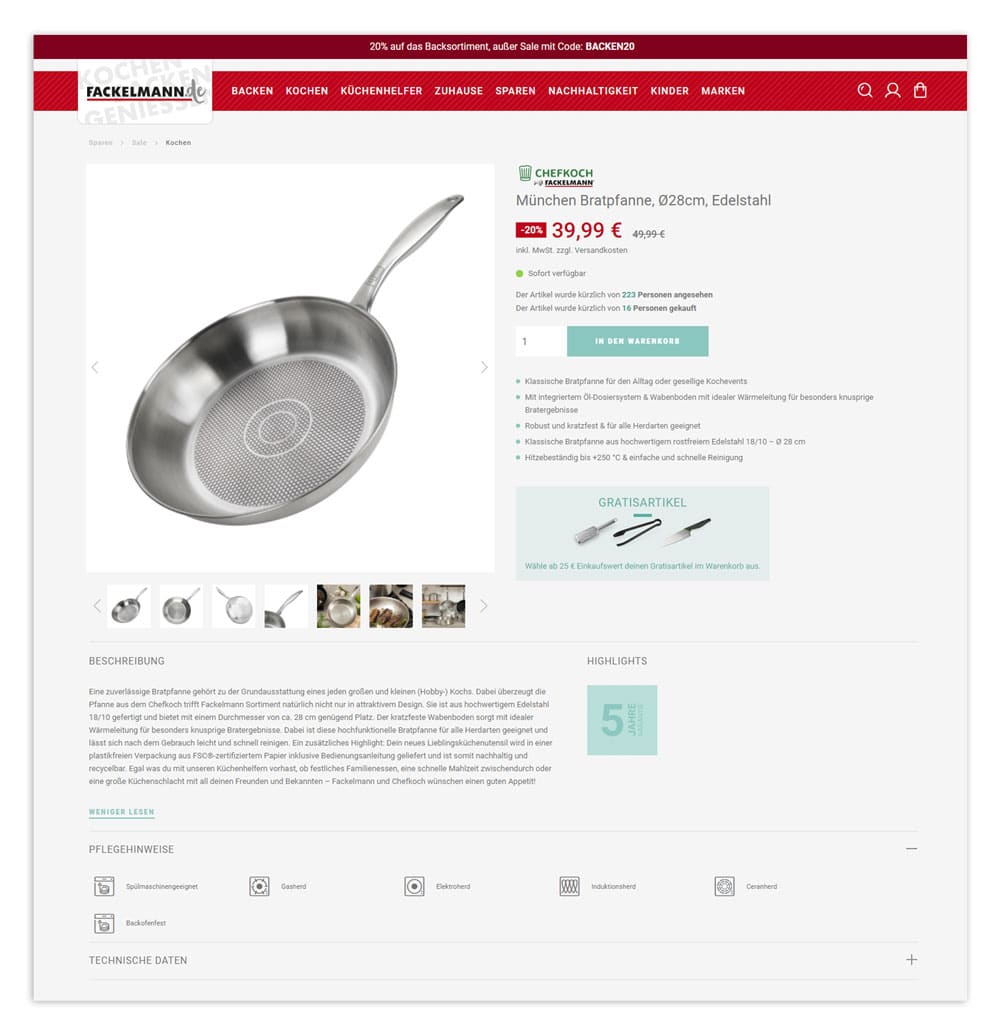
Fackelmann uses a meaningful headline, a list of important features, and a detailed description in continuous text for its product description. (Source: Screenshot from fackelmann.de)
First and foremost, the product description serves to convince your customers to make a purchase. However, it also offers enormous potential for preparing the product data feed for your online shop.
Roughly speaking, there are two types of attributes: You already mention the main attributes when maintaining the product, for example, color, size, material, and brand. However , there are numerous other characteristics that you only describe in more detail in the product description and do not include in the data maintenance itself.
Example of a product description: "These charming rose-colored wedge sandals feature playful details such as butterflies on the straps and sophisticated lacing."
In addition to typical features such as color, special tools can extract a wealth of additional information from this product description. For example, keywords such as "wedge heel," "lace-up," "straps," and "butterflies" can be recognized, which you can now maintain in the product data.
This additional information offers you many opportunities thanks to e-commerce data science. We have summarized some of them for you below:
Detailed product descriptions therefore offer fantastic potential for providing your buyers with the best possible experience. By enriching your product data with all the relevant details from the product description, you get a well-prepared product catalog that you can use to personalize the customer journey. This can include visual characteristics as well as haptic features or functions.
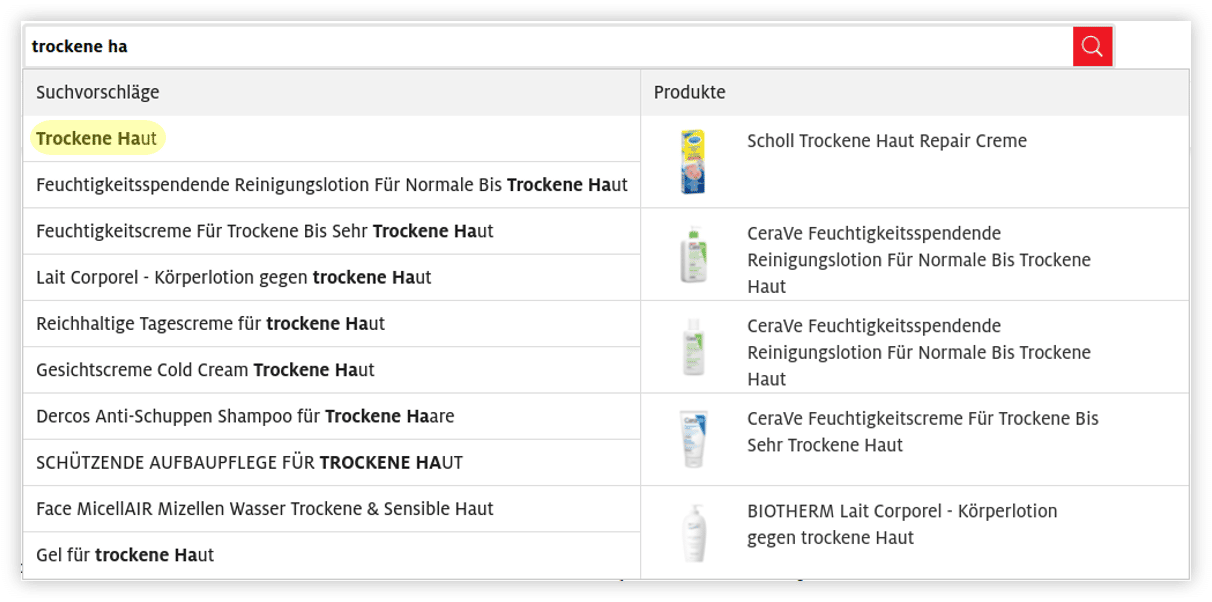
Optimized search suggestions enable customers to search directly for products and advanced features. (Source: Screenshot from manor.ch)
With the right strategy, you can use the product detail page as a conversion lever and take your sales to a new level. To do this, tailor the product description to the needs of your target group, ensure that it is detailed and easy to read, and optimize it for search engines. This allows you to offer your shop customers the best possible advice while reducing the return rate. You can also use the features included in the product text to enrich your product data feed and thus further personalize your online shop, optimize the customer journey, and increase the conversion rate.
The product description in the online shop reflects the features and special characteristics of a product and describes it as accurately as possible. It is intended to replace the consultation in the store as far as possible.
The ideal product description is tailored to the needs of the target group. Make sure it is easy to read and clearly worded, conveying emotion and arousing desire.
The typical structure of a product description includes a meaningful headline, an introduction, the product benefits or details in list form, and more detailed information about the product and its use in continuous text. Finally, a call to action should encourage the reader to make a purchase.
The same SEO guidelines apply to product descriptions as to other content. This includes the use of appropriate keywords, meaningful SEO titles and descriptions, and unique content.
Product descriptions contain additional features beyond the attributes maintained in the online shop. You can read these and use them to further personalize the customer journey, for example, to display similar items.
Want to learn more about personalization in e-commerce?
Check out our e-book on the topic.

You are currently viewing placeholder content from HubSpot Embedded Content. To access the actual content, click the button below. Please note that doing so will result in data being shared with third-party providers.
More InformationYou are currently viewing placeholder content from HubSpot. To access the actual content, click the button below. Please note that doing so will result in data being shared with third-party providers.
More InformationYou are currently viewing placeholder content from HubSpot Meetings. To access the actual content, click the button below. Please note that doing so will result in data being shared with third-party providers.
More Information