Back to overview
  • Increase Shopping Cart Value

Boost your shopping sites—Görtz, babymarkt.de, and dasistweb on personalization on various shopping sites

  • Published February 27, 2023
  • Jonathan Hermann
  • Reading time: 14 min.

If you are familiar with e-commerce, personalization will not be a new topic for you. But nowadays, it is no longer just a matter of making simple recommendations. It is crucial what you present to the customer, where, and how, in order to benefit from the range of advantages that personalization offers. Practical examples and helpful tips from experts at Görtz, babymarkt.de, and dasistweb show you how to take the personalization of various shop pages to the next level and what you should avoid.

A woman looks at black shoes in a shoe store, which serves as an image for personalized shop pages.

Görtz – Personalization on the path to checkout

As a shoe and accessory company founded in Hamburg in 1875, Görtz sells its products through various channels. Today, Görtz operates over 180 stores in Germany as well as a highly successful online shop. Read on to find out how it is structured and which shop pages are particularly well suited for personalized content.


Stay up to date on personalization: Sign up for the Epoq newsletter. Register now!


Home page as a traffic-driving element

A classic customer journey begins on the home page. However, more and more traffic is coming directly to product lists or product detail pages. Nevertheless, 20-25% of visitors to the Görtz store still view the home page. That's reason enough to take a closer look at it.

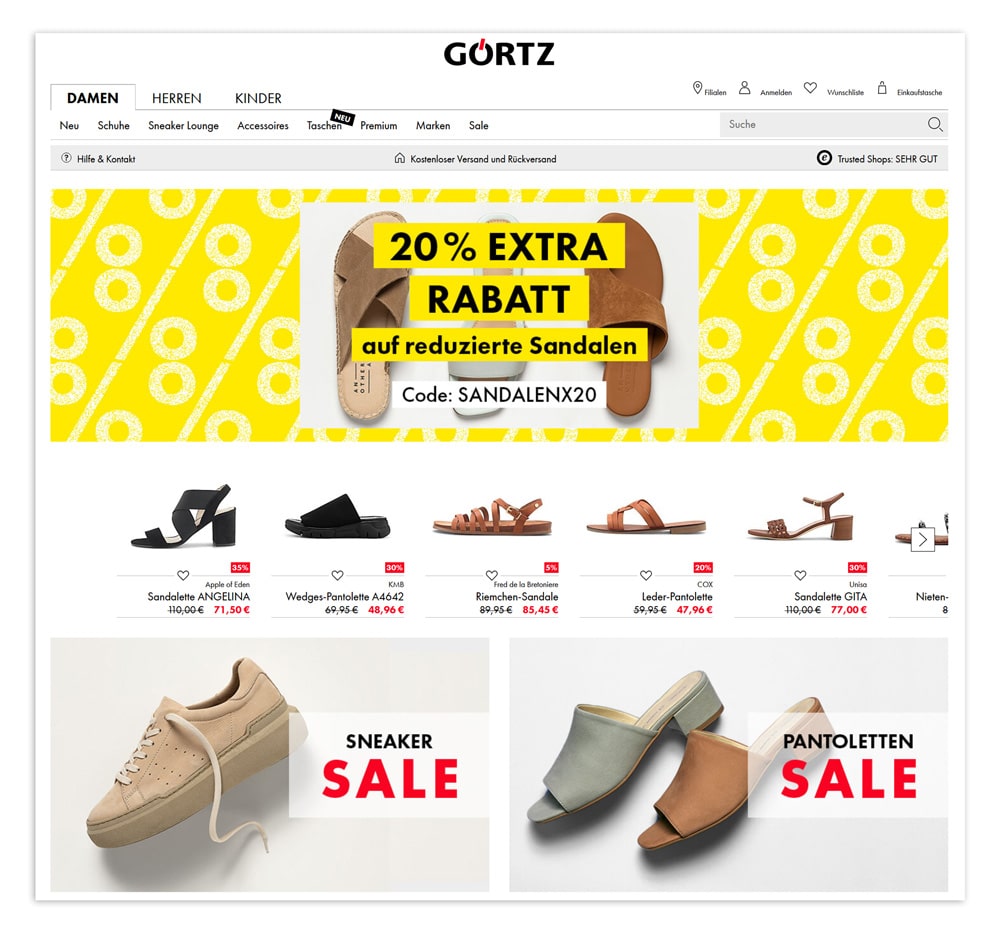
One of the goals of the homepage is to direct traffic. This means guiding customers to where they want to go (or where they should go). In addition to onsite search and navigation, individually displayed banners for specific promotions and matching recommendations can create a feeling of "This shop suits me!" or "This shop knows what I want!" Top sellers can also be used on the home page. Görtz's recommendations and promotional elements have a click rate of 8-10% on the home page. This shows that these displays work very well on this shop page and are positively received.

Individual recommendations from the "Sandals" category are displayed directly below the discount promotion. (Source: Screenshot from goertz.de)

Category page as a high-traffic page type

Another important touchpoint when it comes to personalizing shop pages is the category page. This is because this type of page receives a particularly high amount of traffic. The customer is now one step further along in the customer journey in the online shop and is specifically interested in a category. If this customer already has a history (click and purchase behavior data is available), products tailored specifically to them can be displayed. Görtz takes advantage of this by integrating 1:1 personalized product recommendations into the first eight slots on the category pages. For example, if the customer's shoe size is known, it is important to only display products that are available in that size. Otherwise, this can lead to frustration or even to the customer leaving the online shop. The recommendations fit seamlessly into the product list, giving this recommendation slot extremely high visibility.

Product detail page as a decisive purchasing argument

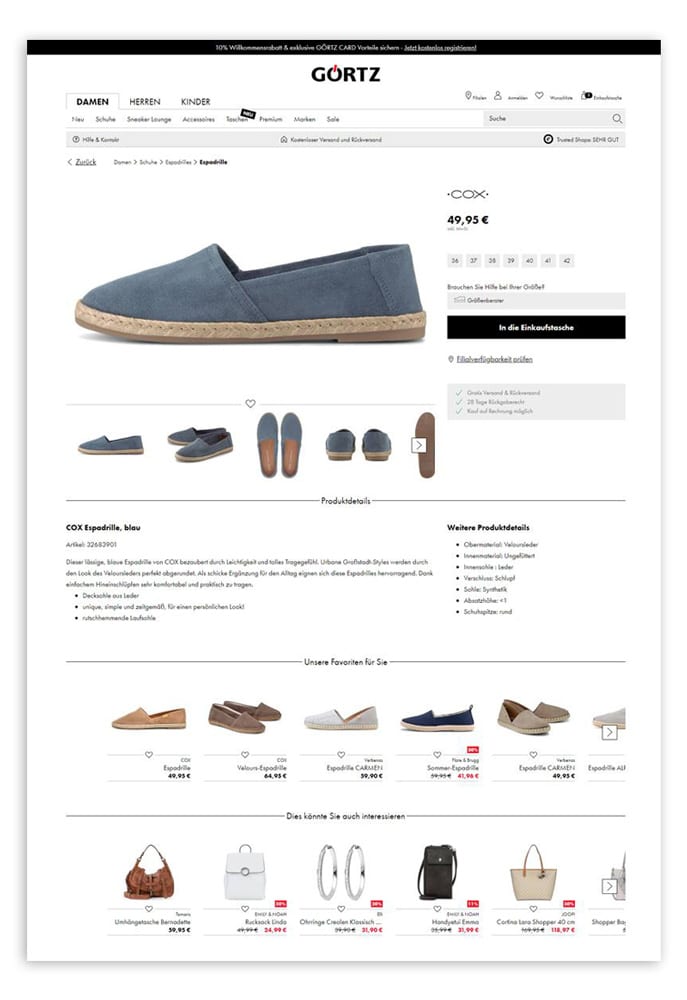
One step closer to making a purchase, the customer is on the product detail page (PDP). Here, it makes sense to display classic alternatives to the product. A cross-sell/upsell slot that shows products that complement the selected item can also be useful. Görtz presents a recommendation widget with alternatives below the viewed product, as well as one with complementary products (cross-selling). It is important to note at this point that not all customers scroll down to the recommendations. Nevertheless, in the case of Görtz, the click rate for these recommendations is 25-30% among visitors who see them. From Görtz's point of view, what is displayed at this point is crucial, as the customer is already relatively close to the conversion funnel.

It is therefore important to find a balance so that product recommendations are not lost, but also not presented too aggressively, distracting the customer from the product they are actually viewing. As an e-commerce manager, you should also consider the lead source of the product detail pages. Traffic to this page often comes from external sources, such as search engines, making the PDP the first page a visitor sees in the shop. If too many alternatives are advertised here, it can distract from the purchase of the actual product.

Alternatives and cross-selling items determine the recommendations on the PDP. (Source: Screenshot from goertz.de)

Shopping cart layer as an opportunity for cross-selling

As soon as a customer clicks on the "Add to shopping bag" button, a shopping cart layer is displayed. In this case, the shop customer is already very close to making a purchase, so what is displayed at this point is even more crucial. In contrast to the product detail page, no alternative products should be displayed here. These distract from the purchase and thus cause uncertainty in the late phase of the customer journey. Nevertheless, e-commerce personalization can also be applied here. Suitable cross-selling items, such as accessories and care products, have proven successful in most cases.

Shopping cart as the final step before completing the purchase

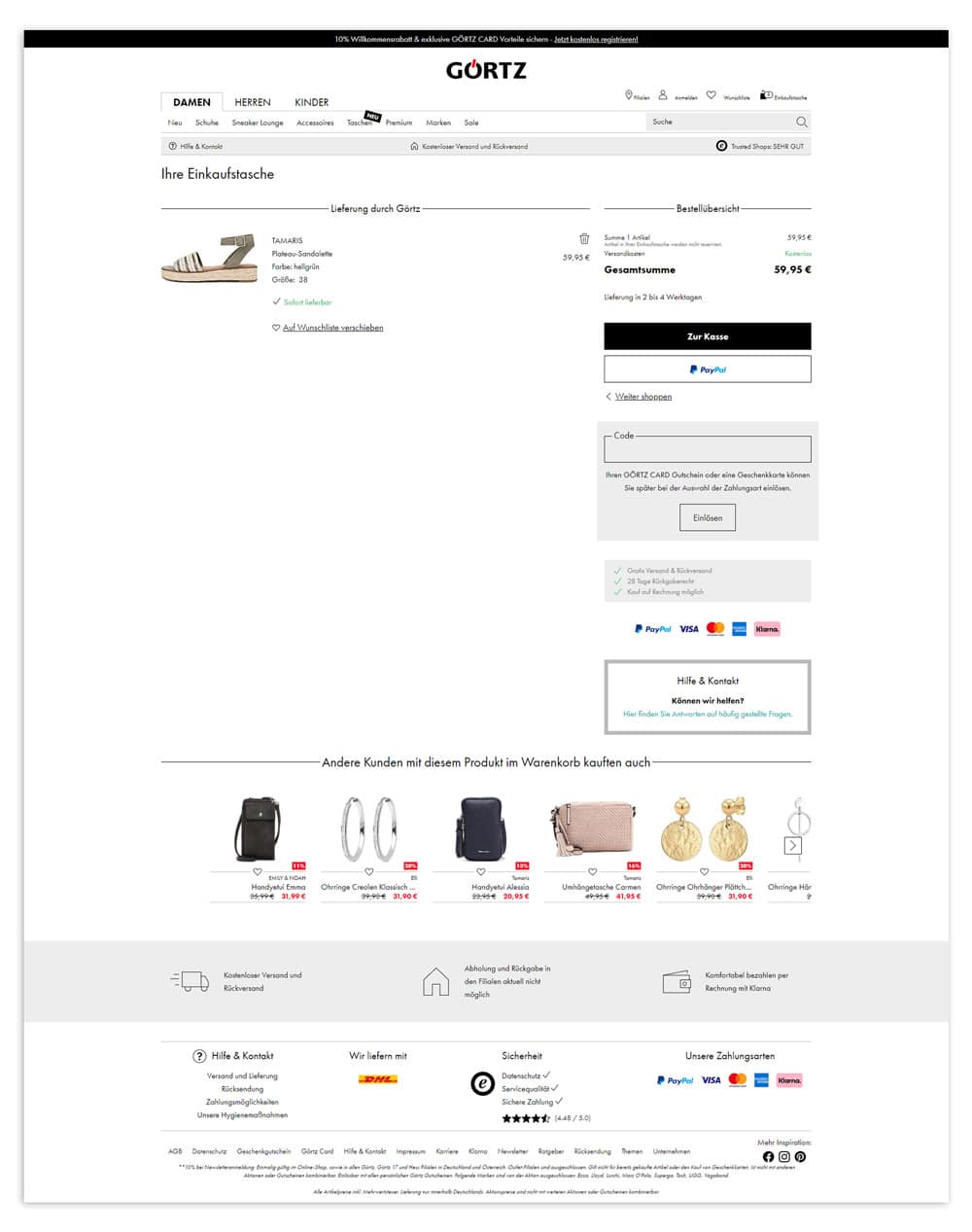
The final step before completing the purchase is the shopping cart. In addition to the classic "Other customers also bought" widget, personalized cross-selling items can also be displayed here. Personalized recommendations that match the entire shopping cart can also be useful at this point. However, as in the shopping cart layer, alternatives can cause distraction and uncertainty in the purchase decision. Görtz presents matching products at the end of the shopping cart page. This way, customers are not distracted and important elements such as the order overview remain in view.

Görtz offers shop customers a kind of checkout area in their shopping cart and inspires them to buy additional items. (Source: Screenshot from goertz.de)

Always keep in mind that the success of personalization on shop pages depends on many factors. Therefore, consider your target audience, your products, and the market you are in. In practice, different personalization elements can have more or less effect depending on the shop. So don't be afraid to try new things and always work on improving your shop!

babymarkt.de – The product detail page as the linchpin

babymarkt.de is Europe's largest online shop for baby and children's products. In addition to Germany, the company is represented in a total of 13 other countries in Europe and in China. Babymarkt.de also operates six stores in Germany. To make a purchase in the online shop, customers must visit the product detail page, where they can view images and information about the product. Read on to find out how babymarkt.de has optimized the product detail pages in its own online shop and enhanced them with personalized elements.


Stay up to date on personalization: Sign up for the Epoq newsletter. Register now!


The role of the product detail page

There are several reasons to pay special attention to the PDP when personalizing shop pages. Since shop customers who are on the product detail page are moving toward a conversion, this page is particularly important. They may even already have an intention to buy or at least an interest in the product. It is therefore very important not to lose these interested customers. To ensure that shop visitors continue with the purchase process, babymarkt.de has made it its mission to provide the best possible support for the purchase decision and relies on the use of personalization to achieve this.

Basic strategies for personalization

First, it is worth taking a look at the classic strategies for personalization in online shops. Widgets such as "You may also like" can be used to display alternatives that are similar to the product being viewed and fall into the same category. These widgets take on the role of the salesperson in brick-and-mortar stores, who shows further options and the range of the product range. These recommendations are particularly suitable for customers who are not yet entirely sure whether the product they are currently viewing is the right one. By displaying substitutes, visitors can compare products and find the item that suits them best.

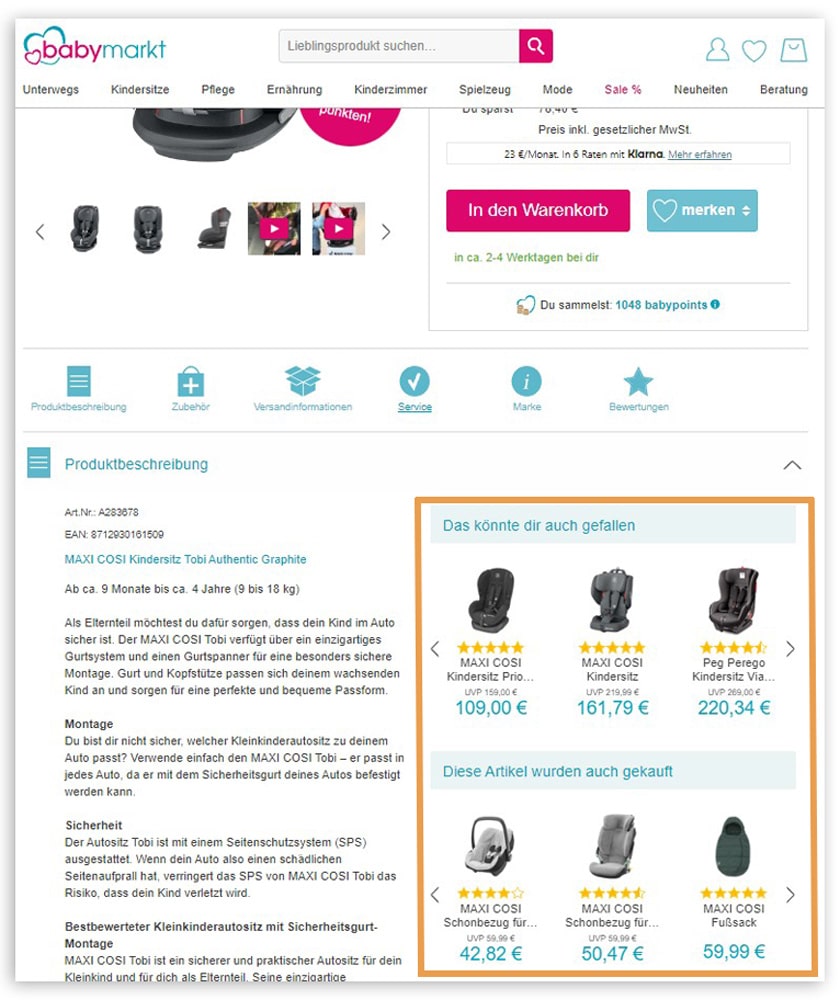
The second pillar of the basic strategies consists of recommendations that match the product displayed. Accessories and additional products are suitable here. It is important that the recommendations are well coordinated. In the example, a cover for a child seat is displayed that matches the child seat viewed by the customer. A customer who is on the product detail page already has a specific interest, and babymarkt.de uses cross-selling recommendations to show what complementary items are available.

These two methods allow you to show your customers interesting and relevant articles, thereby keeping them in your shop for longer. The two basic strategies presented here are used on all product detail pages at babymarkt.de. In addition, the online retailer also relies on a few special strategies.

Suitable alternatives and complementary recommendations form the basis of personalization strategies on product detail pages. (Source: Screenshot from babymarkt.de)

Targeted special strategies

In addition to the personalization options mentioned above, there are many other options available. Some of these include targeted recommendation strategies, which are used by babymarkt.de in more specific cases.

Sold-out product detail pages

Of course, it is generally best to avoid customers coming across sold-out products when searching. However, with very specific searches, it can happen that only a few products match the search query and sold-out products are displayed. Wish lists or external links may also cause customers to land directly on the product detail page of a product that is currently sold out. In order not to lose the shop customer in these cases, it is advisable to display a prominently placed alternatives widget on the PDP. This widget should present the shop visitor with the best possible alternative items for the desired product. By displaying alternatives that are very similar to the original product, the user is less likely to leave the site. Reminder options when the product becomes available can also prevent frustration and help to retain customers.
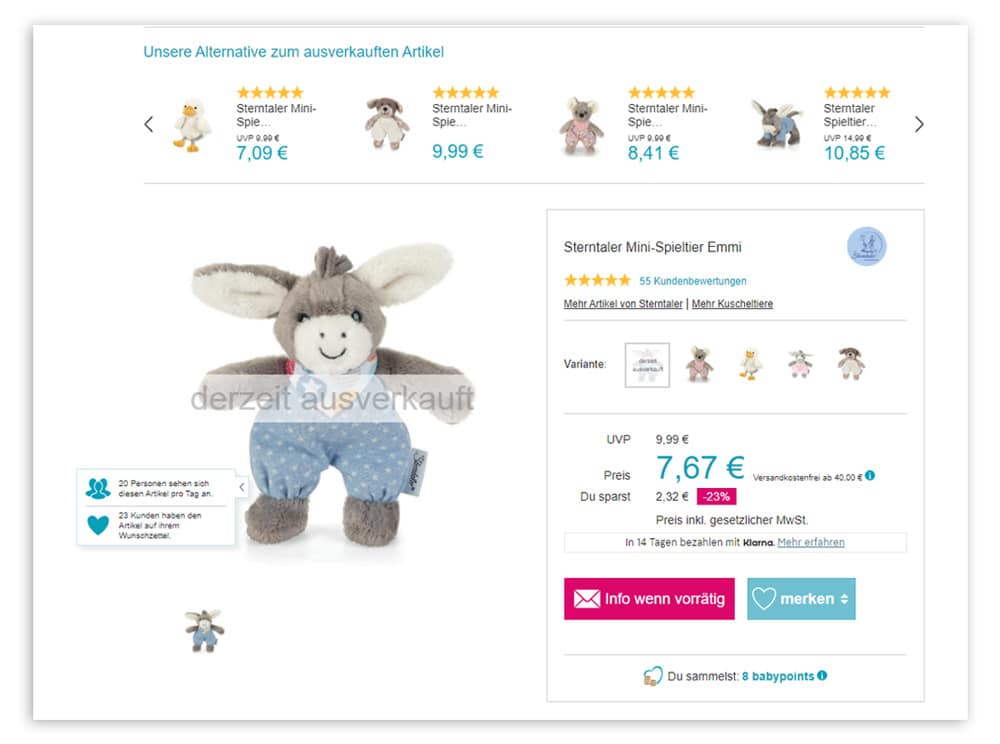
In the upper viewing area, the customer is shown alternatives to the sold-out item. (Source: Screenshot from babymarkt.de)

Series and outfits

Another specific example of recommendations are "products from the series." These are matching products that are in the same style and from the same brand. Such series widgets are not useful for all categories. However, they are particularly suitable for products in categories such as furniture, nutrition, or personal care. This allows customers to see that they can furnish an entire room with products from the same series, for example, furniture. This confirms their choice and makes the decision easier. It also allows the shop's product range to be presented.

Outfit widgets in the fashion sector are not necessarily tied to brands or series/collections, but can still be linked to them. Here, clothing items that match the product shown and complete the outfit should be presented. Color and size availability should be taken into account. Customers can add the products shown in the recommendation widget directly to their shopping cart or save them to their wish list.
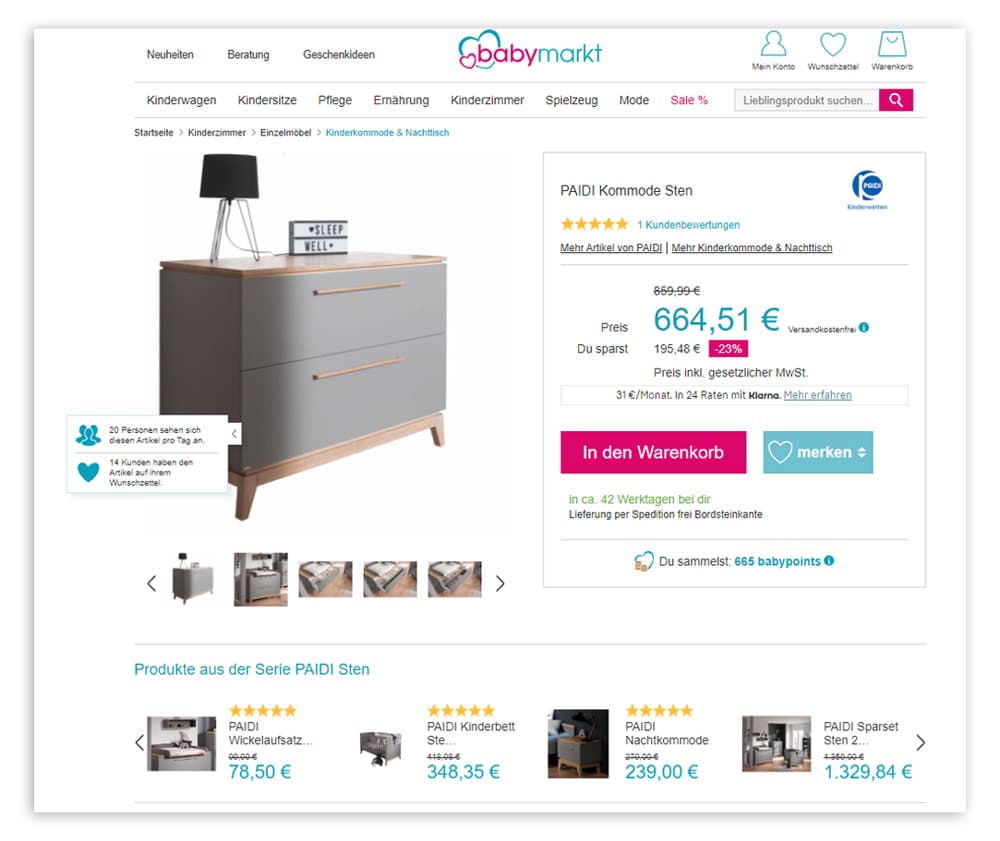
If you are interested in a chest of drawers from a particular series, you can see other furniture from the same series in the recommendation widget. (Source: Screenshot from babymarkt.de)


Other shop pages

Personalization in online shops is also worthwhile outside of the product detail page. If a customer uses the search function and does not find what they want, they end up on a zero-hit page and do not even reach a detail page. Since a bounce is relatively likely here, it is worthwhile to display product recommendations tailored to the shop visitor at this touchpoint as well. For example, you can display products on zero-hit pages that match your customer's history. The products are then based on what the respective customer last viewed. This allows you to avoid frustration if a customer searches for a product that you do not have in your range. Interesting products then quickly lead the customer back to a PDP.

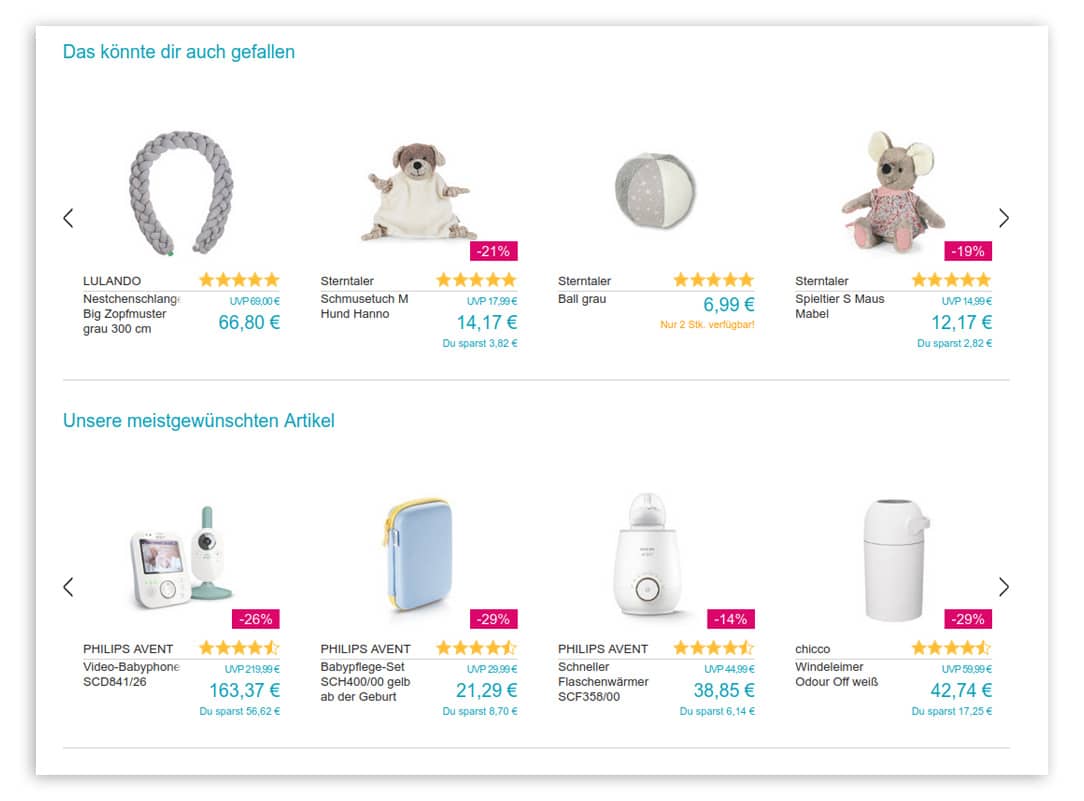
You can also display recommendations in customers' wish lists to try to guide them back to a product detail page. Try using complementary cross-selling products that are tailored to the wish list to show other suitable items, or inspire your customers with interesting new products. In the case of babymarkt.de, these are based on which products other customers have on their wish lists and offer an insight into the most desired items.

The wish list can inspire customers with additional items. (Source: Screenshot from babymarkt.de)
dasistweb – Personalization from an agency's perspective

dasistweb is a Shopware agency that stands for technically, visually, and qualitatively sophisticated e-commerce developments based on Shopware. As experts in user experience and performance, they show what agencies need to pay attention to when personalizing different shop pages.

Advantages of personalizing shop pages

First, let's look at the advantages of personalizing store pages. These can be divided into the store operator's and customer's perspectives, as both groups can benefit from personalization in online stores.

Shop operators want to...

  • increase customer satisfaction,
  • Strengthen customer loyalty,
  • improve the customer experience,
  • make better use of large product ranges,
  • reduce the bounce rate,
  • increase sales.

And that's exactly what they achieve with the help of personalization. This, in turn, has a positive effect on customers. They feel better understood, are inspired (for longer), stay longer, come back more often, and feel well advised.

Content personalization

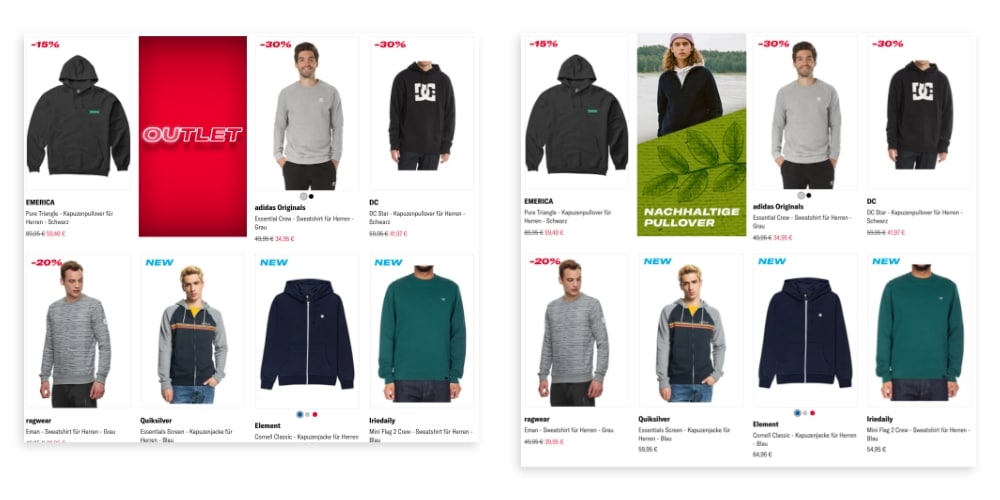
Many online shops today rely on appealing content, as the connection between content and commerce is becoming increasingly important. This informs and entertains visitors, thereby increasing customer satisfaction and loyalty. Many e-commerce managers use personalization to ensure that the content displayed is always relevant. As shown in the image, customers who are classified as "price-sensitive" are shown different content than, for example, "environmentally conscious" buyers. You can expand the use of personalized content on shop pages as you wish. In addition to price sensitivity and environmental awareness, you can also take gender, new customers, or brand preferences into account to cater to individual interests.

Content allows online shops to convey values and information and invite customers to browse. This makes it easier for customers to find their way into the online shop. But be careful! You need a wide pool of content, landing pages, and the technical requirements to make the use of content profitable.

Personalizing content can improve the customer experience. (Source: Image from dasistweb)

Personalization in the shopping cart

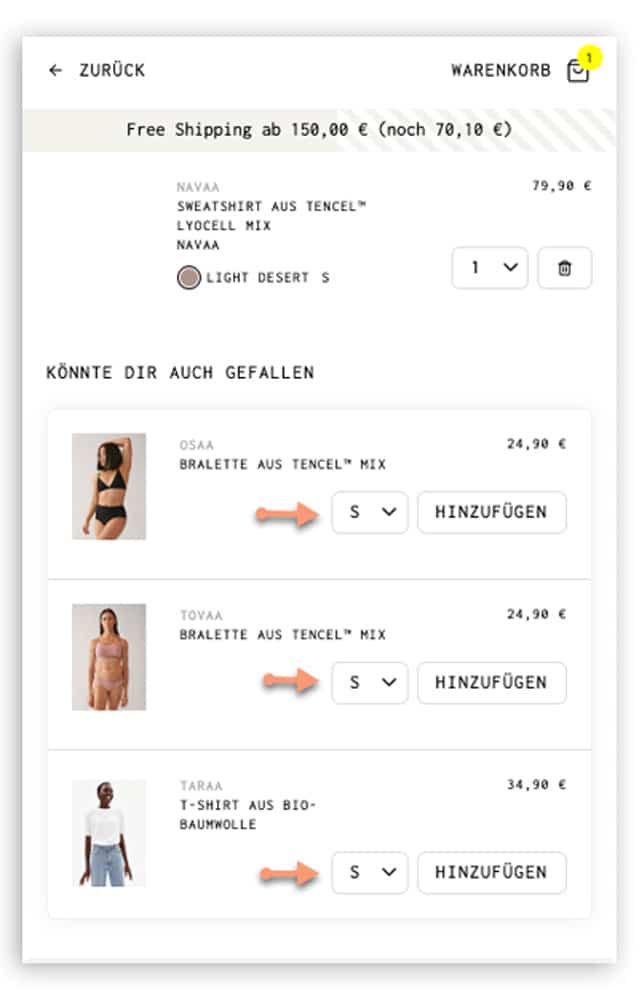
As already described, accessories and matching products are ideal for personalization in the shopping cart. In the fashion sector, so-called "essential" products such as socks, underwear, etc. are also suitable here. It is particularly important that these products are always displayed in the right size and can be added with a simple click. Another option is to offer products that bridge the gap to free shipping. Be careful not to lose the customer in the shopping cart and don't overwhelm them. Also, don't display any more "alternatives" here.

The customer is shown suggestions directly in the appropriate size. (Source: Image from dasistweb)

Challenges and obstacles

Before implementing personalization, it is important to address the challenges and consider what makes sense for your own store.


E-commerce managers should pay attention to...

  • a range that is too small or homogeneous,
  • too few users / data / orders,
  • poor product data quality,
  • a team that is too small in the online shop,
  • Lack of data for tracking.

Conclusion: Personalizing different shop pages is worthwhile—if you do it right!

Personalization in online shops is more of a process than a project. Once the challenges have been overcome, personalizing different shop pages offers many advantages for e-commerce managers and customers alike. Satisfied customers have a positive long-term effect. If your customers are addressed individually in your store, you can set yourself apart from the market. The right sizes, prices, and brands help every visitor find the products that are right for them. So if you have a suitable concept, don't be afraid to use personalization and take advantage of the numerous opportunities it offers.

Presentation at the Personalization Experience Day 2021

As part of PXD 2021 (Personalization Experience Day), the following experts were guests at the webinar "Boost your Shopping Sites" and reported on various ways to optimize shop sites with personalization elements. From left: Timo Bergmann(Head of eCommerce at Görtz), Fabian Ollig(Project Manager at babymarkt.de), and Martin Weinmayr (Managing Owner at dasistweb).

Jonathan Hermann
Working student in marketing
Joni gained experience in personalization as a working student in marketing. His responsibilities included content creation, e.g., for our blog or our social media channels. He also took care of maintaining the English website. In addition to his work at Epoq, Joni studied marketing communication and advertising.